Louis Hira
CONTACT US
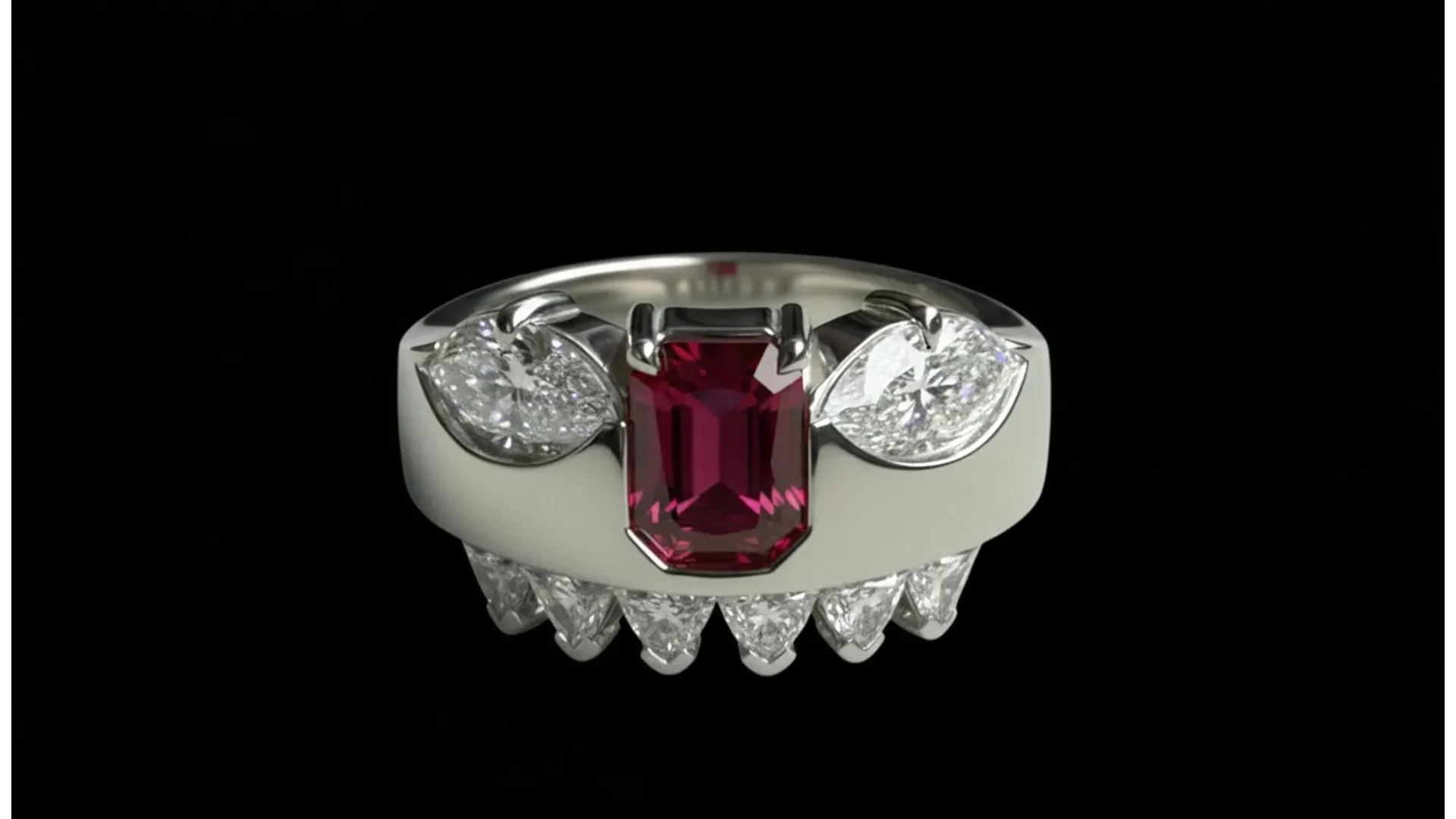
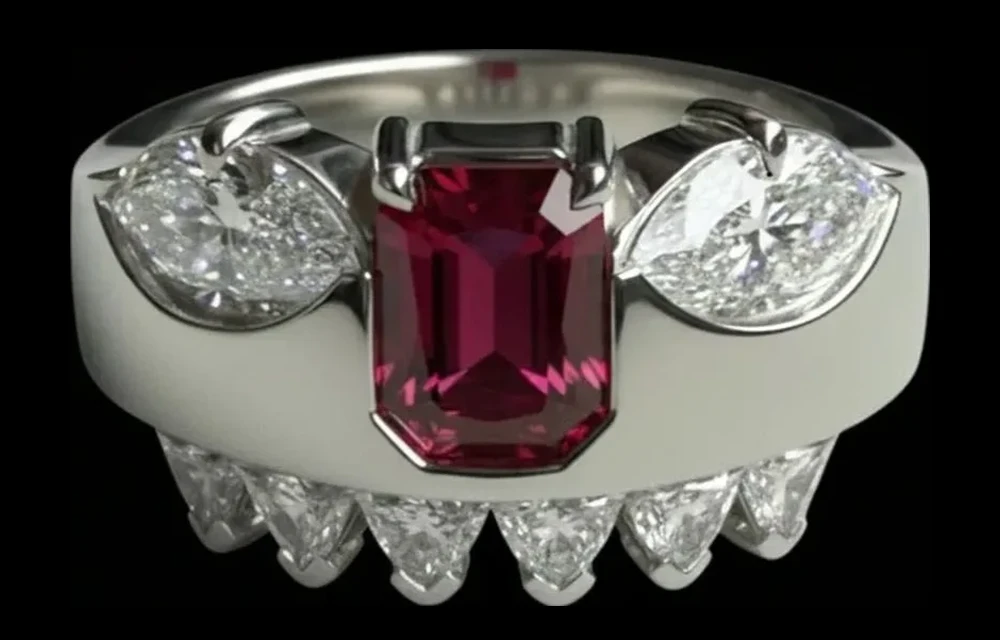
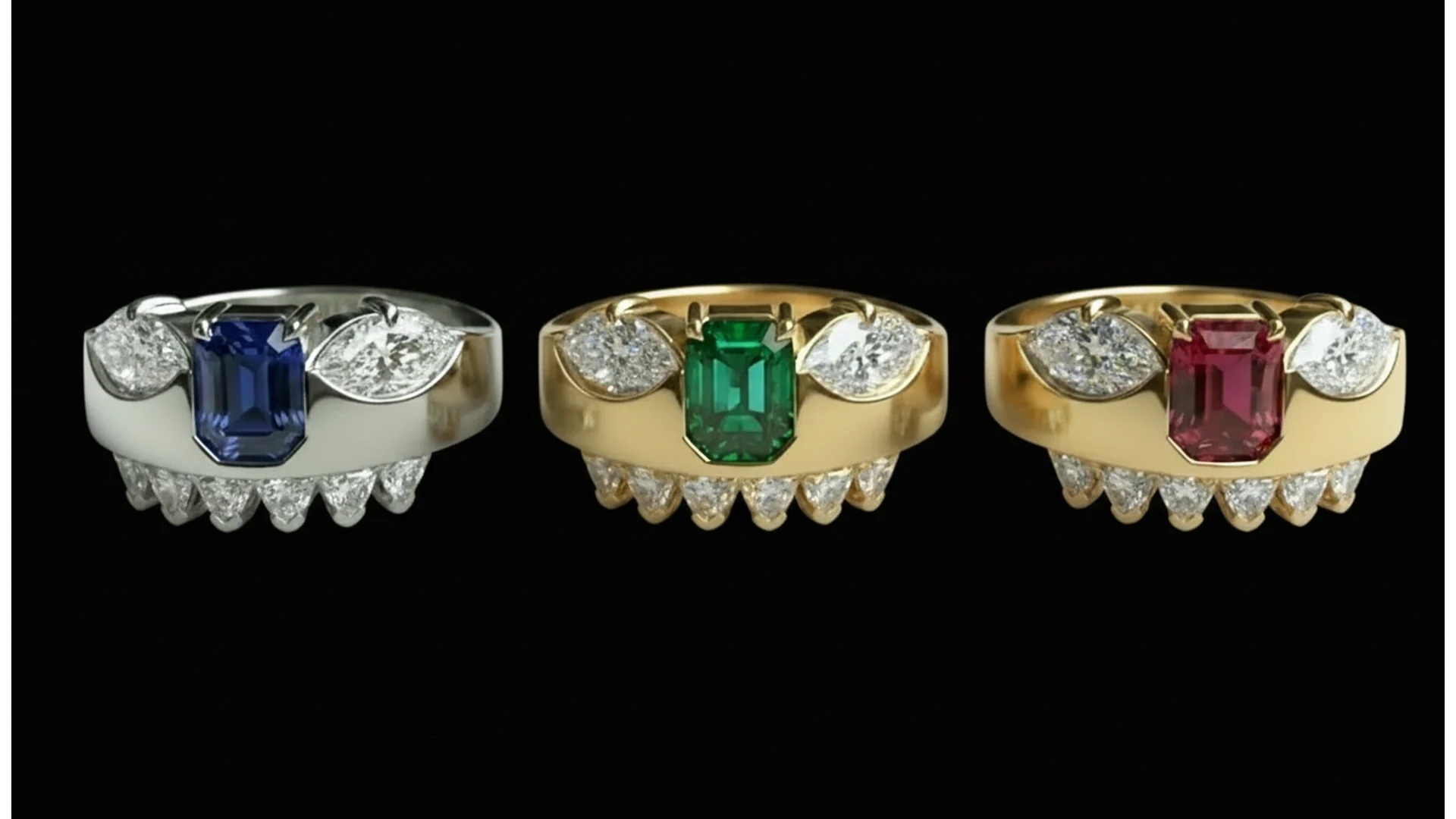
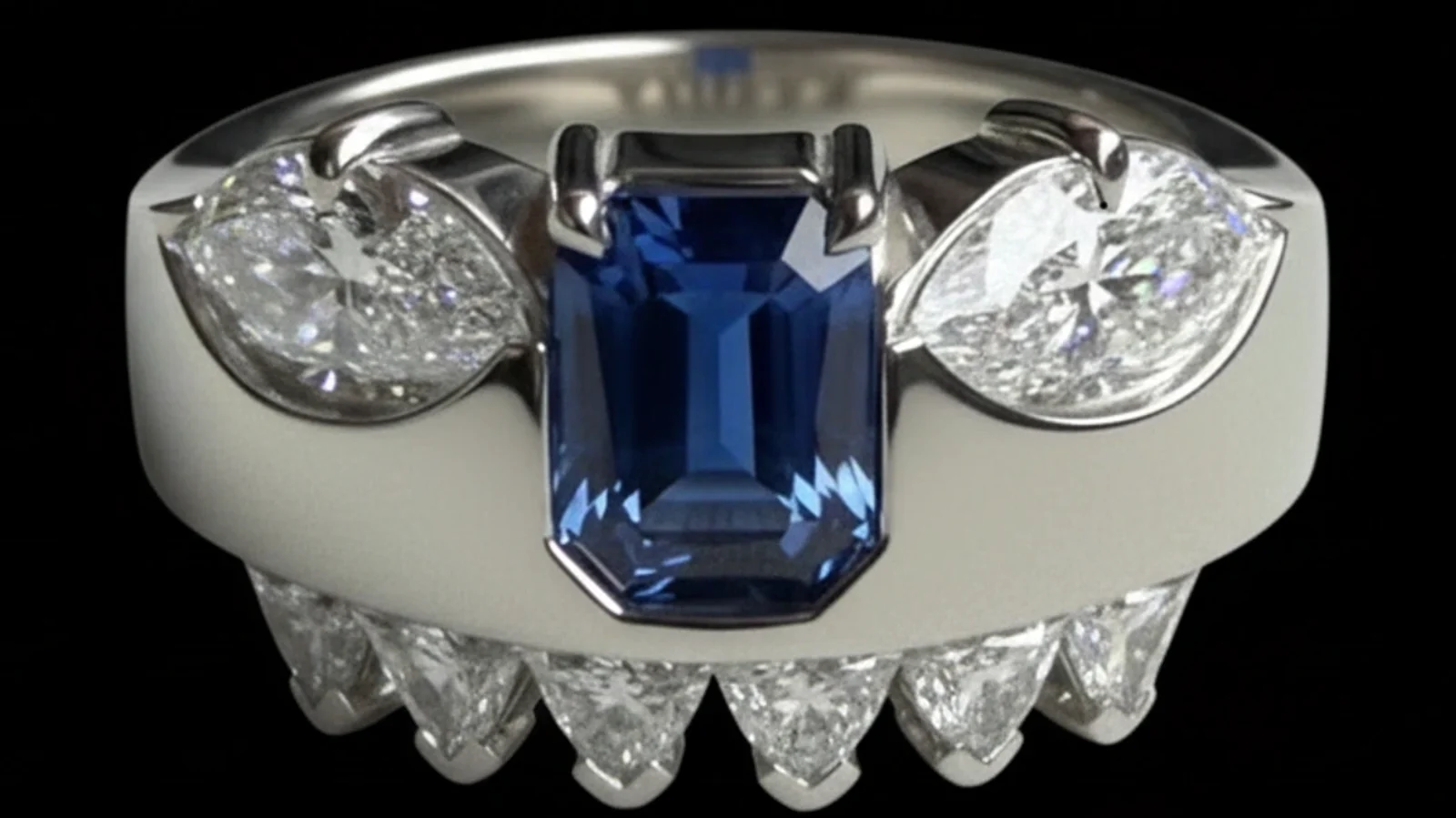
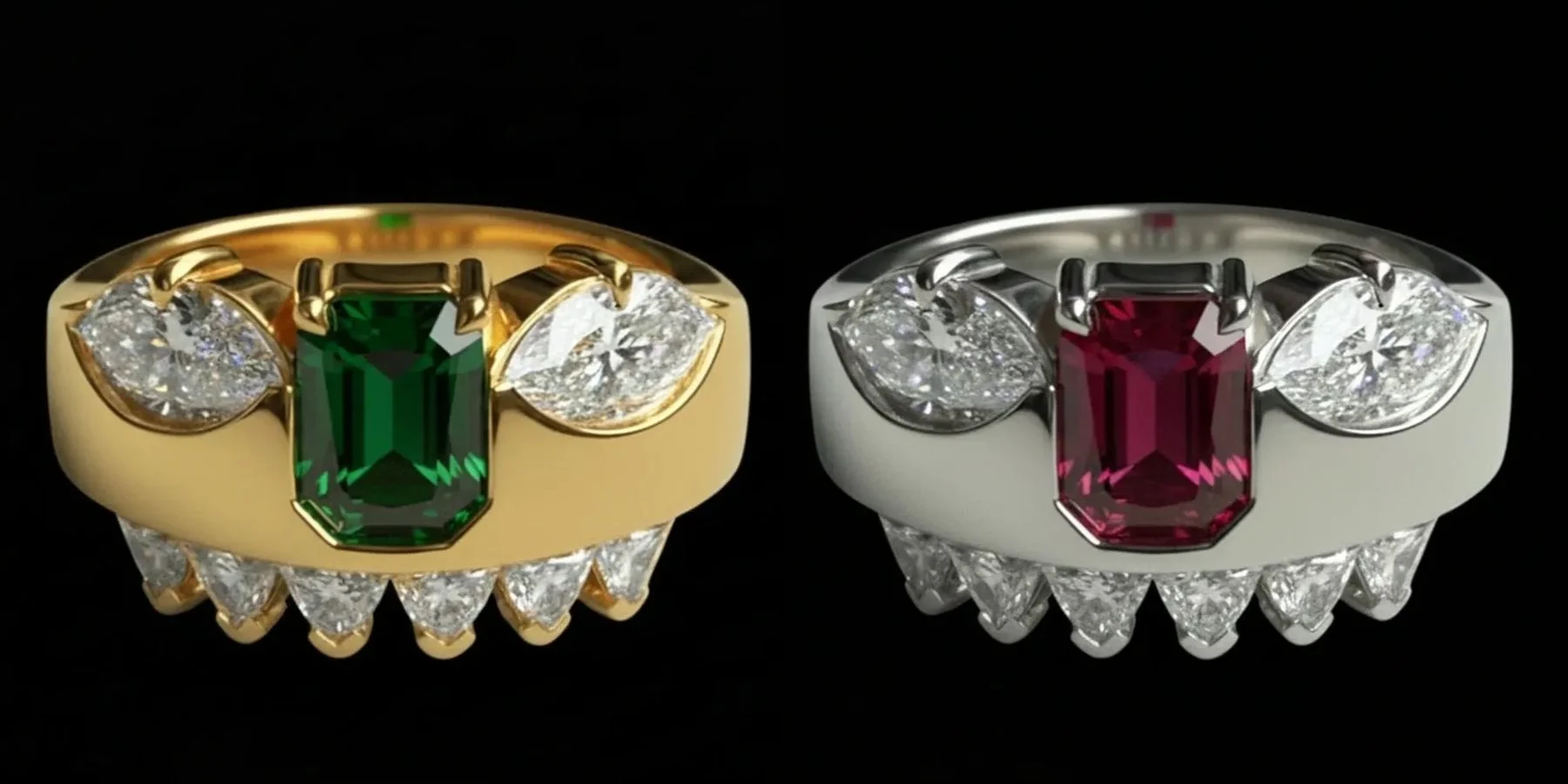
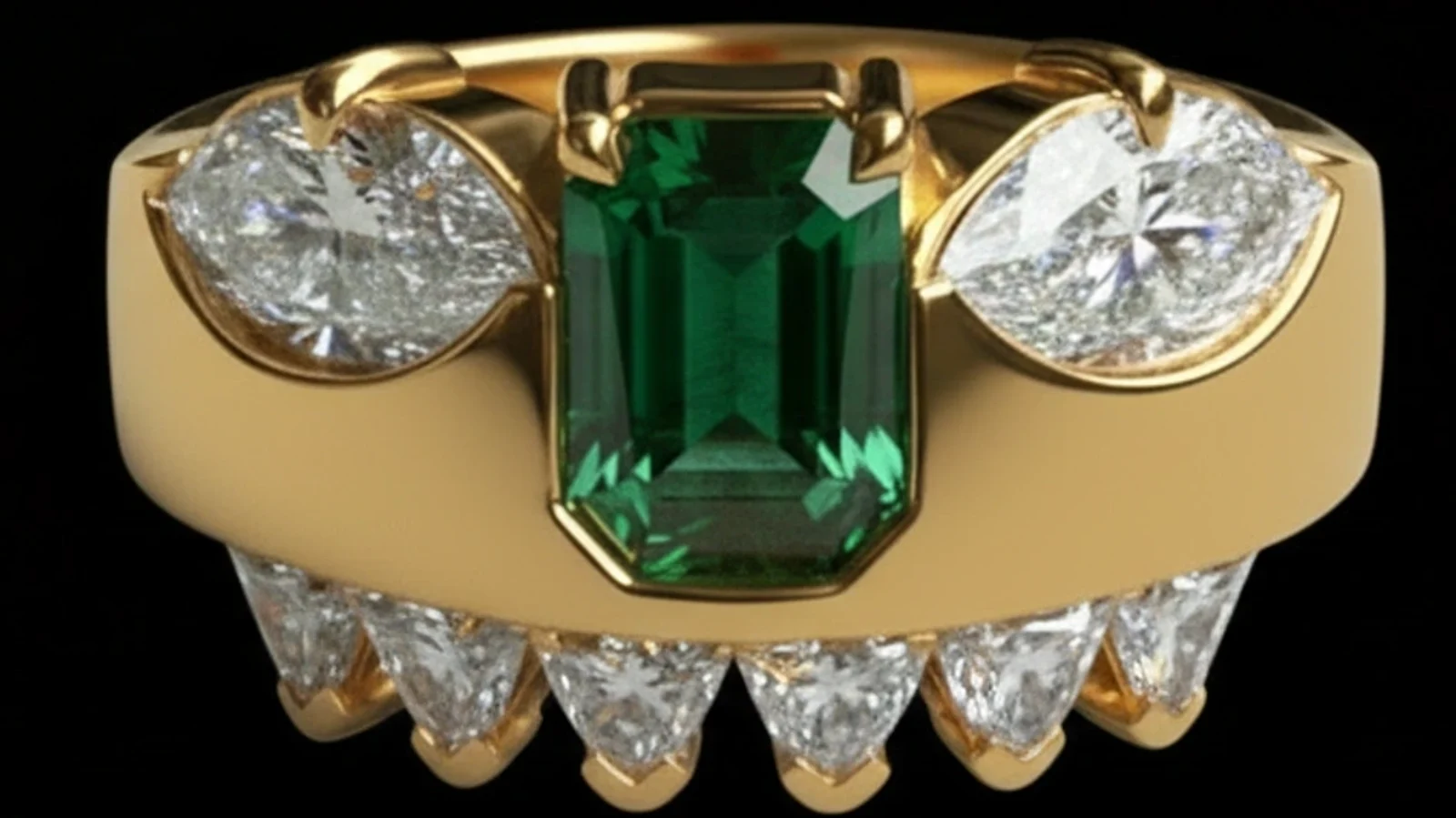
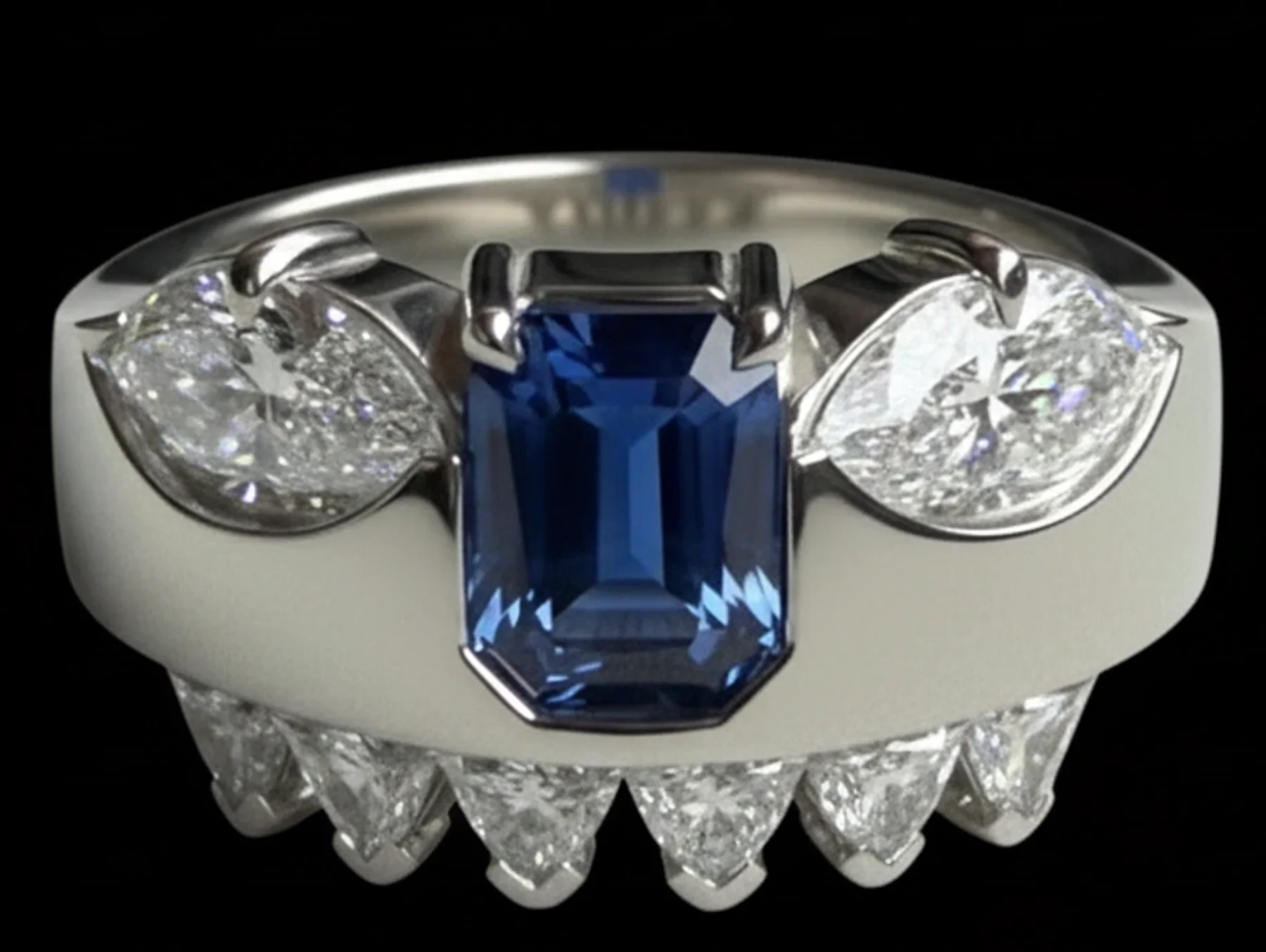
Louis Hira Face ring with marquise diamond eyes and a central sapphire nose

THE FACE COLLECTION

THE FACE COLLECTION

by Louis Hira

Bespoke rings

Fine jewellery designed by you

Scroll
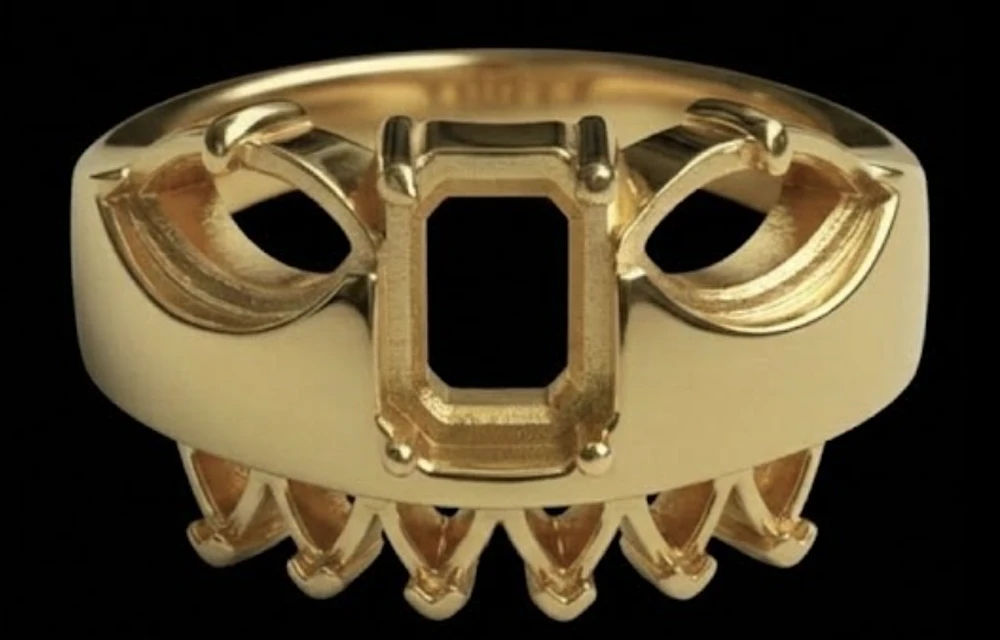
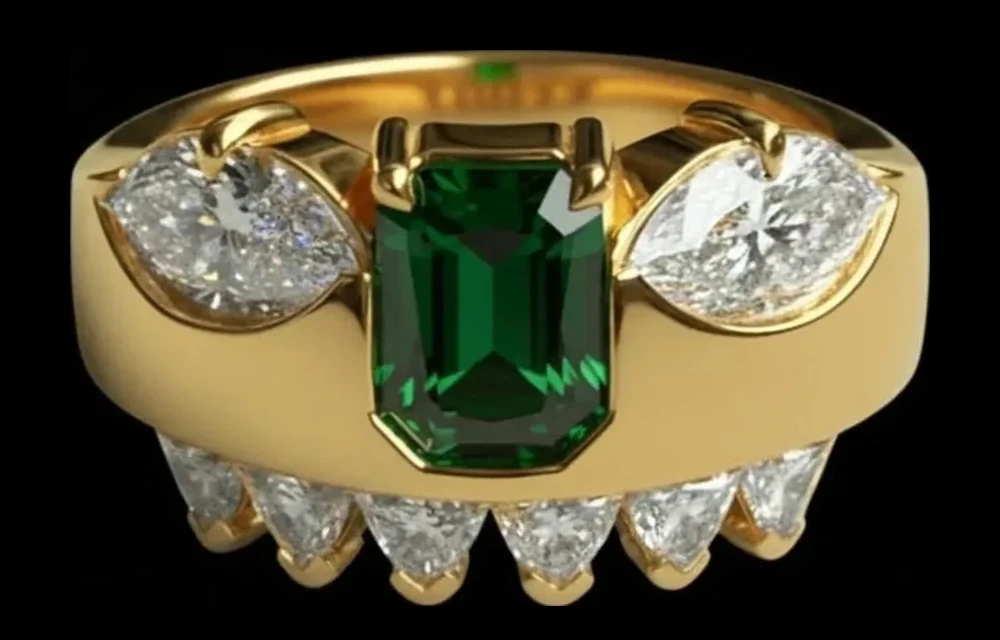
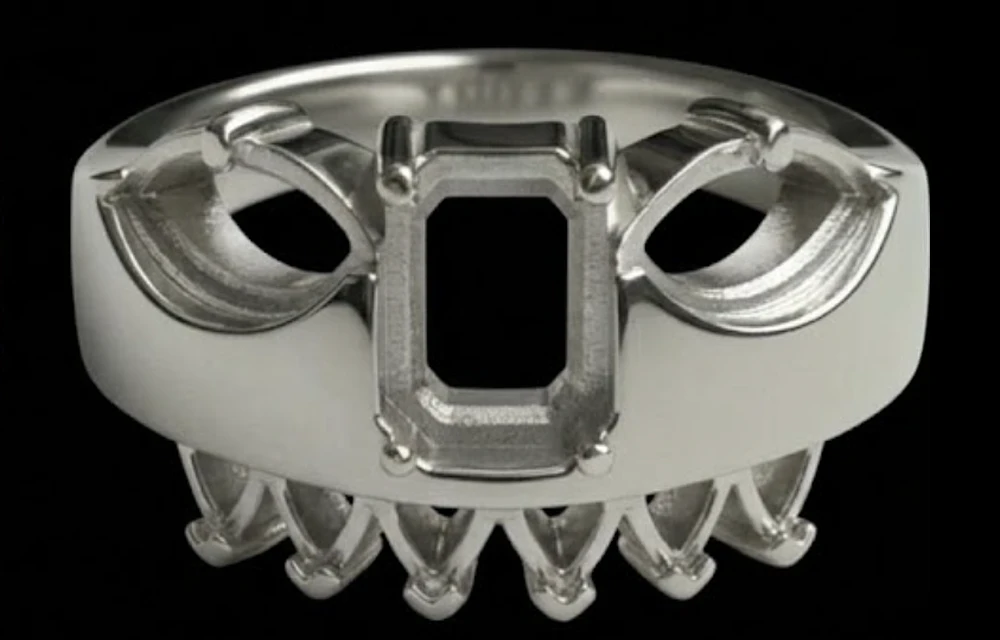
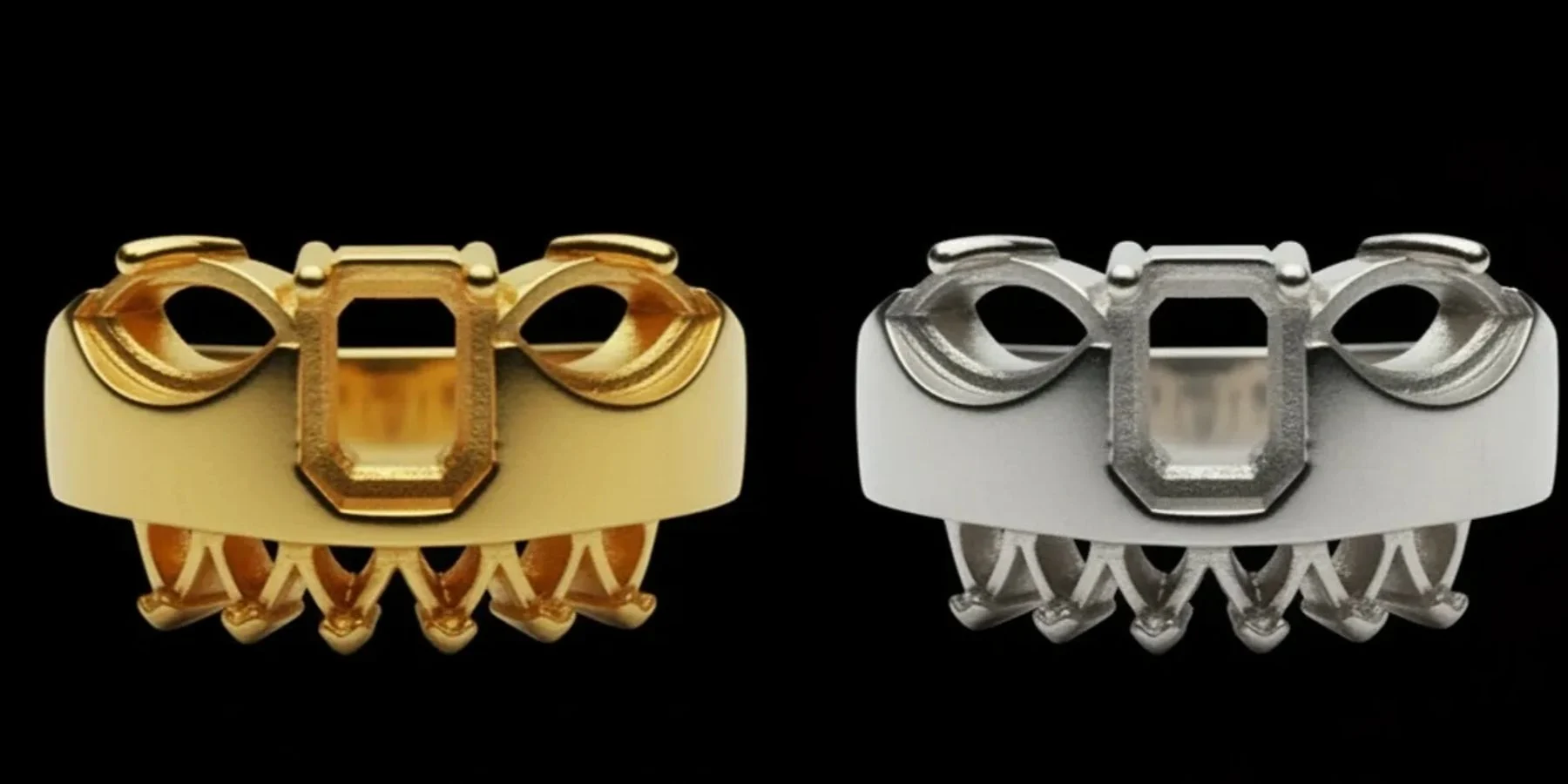
Louis Hira ring frames in 18k gold and platinum 950

THE FACE COLLECTION

FORGED THE FORM.
FIND YOUR FEATURES.

MOST RECENT COMMISSION

DIAMOND EYES.
SAPPHIRE NOSE.

This one is special. Diamond EYES, Diamond TEETH, Sapphire NOSE. 3.94ct total, set in polished platinum 950.

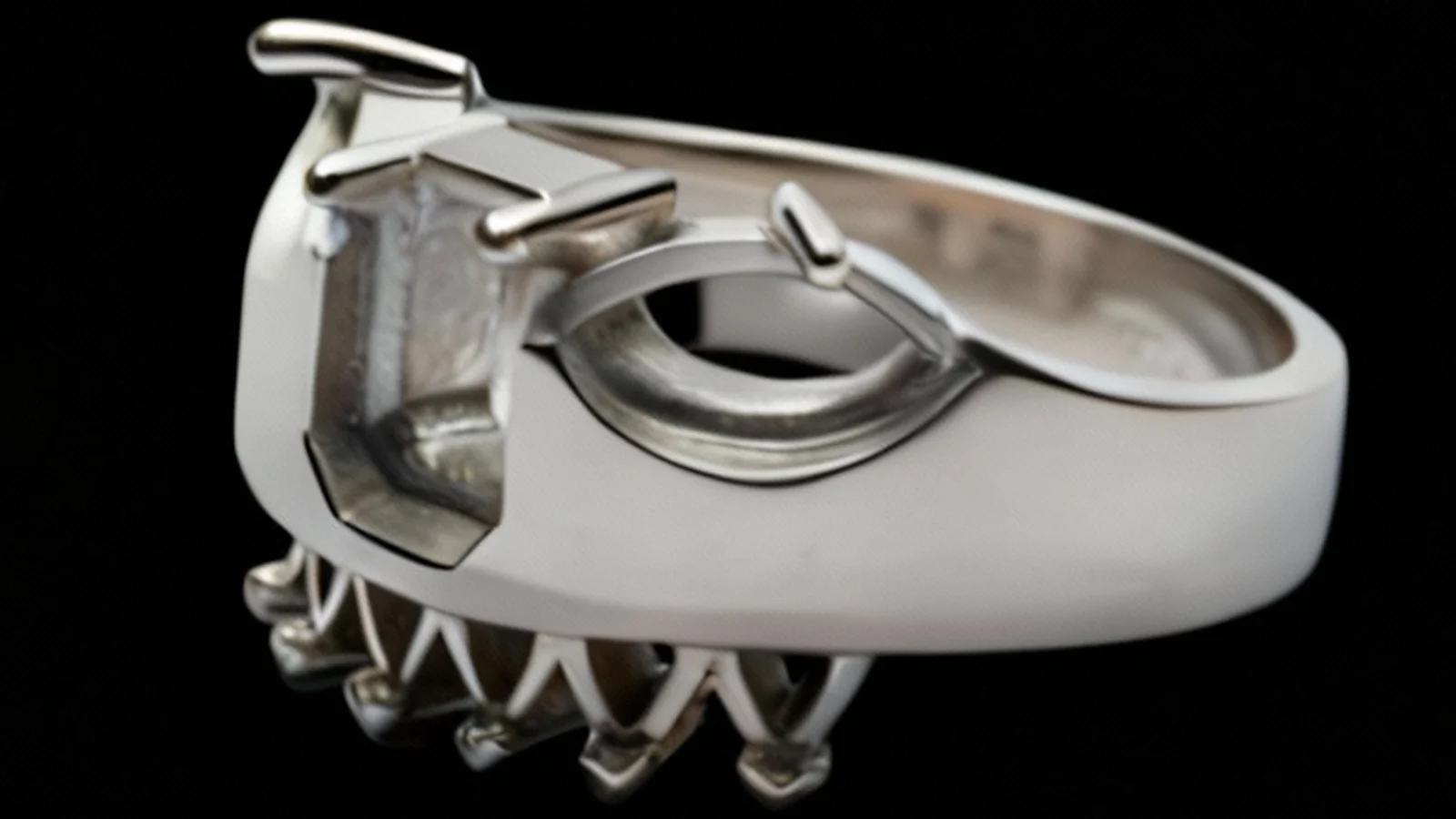
Close-up of a silver ring setting without stones on a black background.
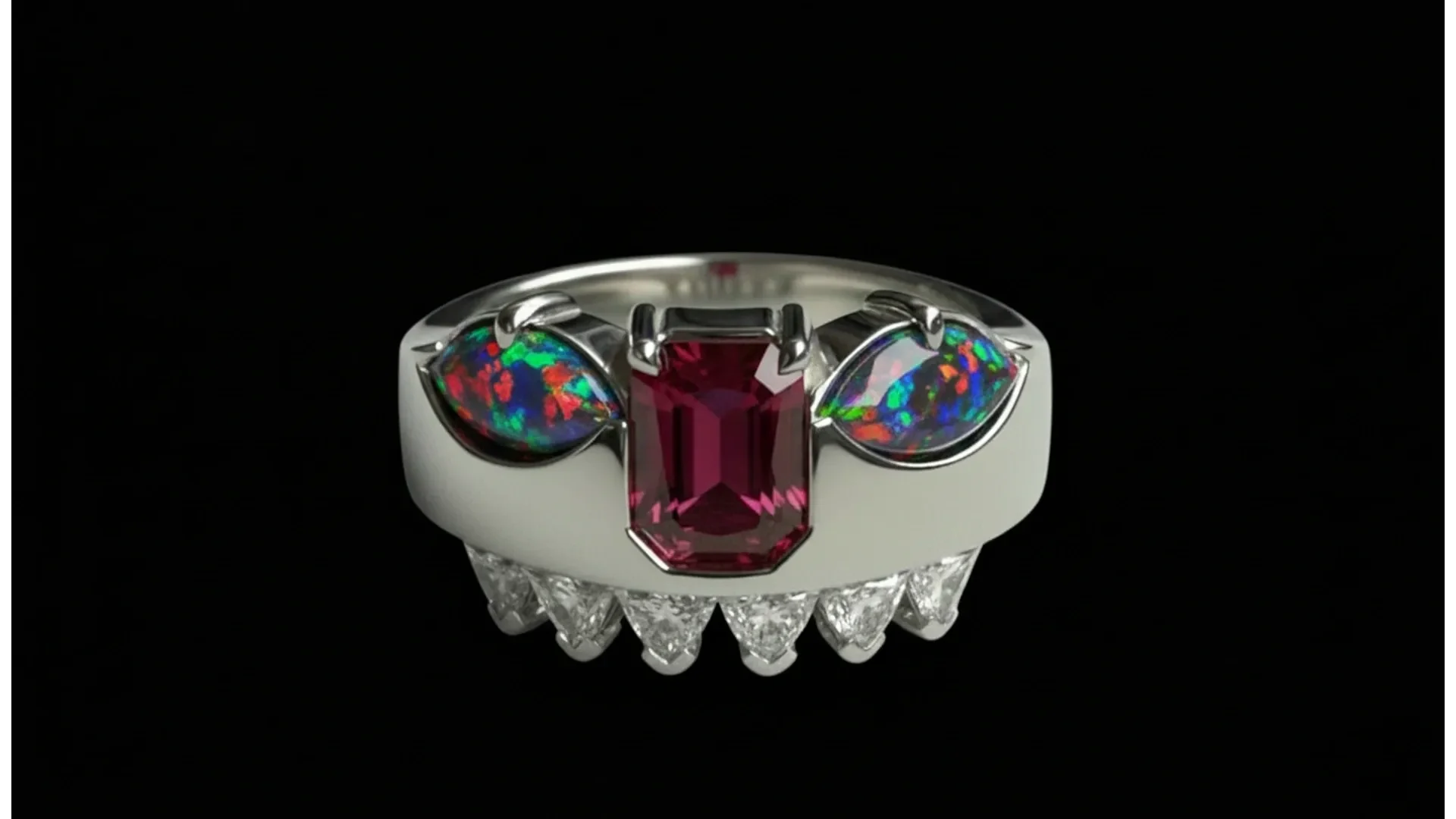
Elegant ring with colorful opals, a red gemstone, and diamond accents on a silver band.

FACIAL FEATURES

PICK YOUR EYES.
PICK YOUR TEETH.
PICK YOUR NOSE.

FINALISATION

ALL FACES ARE BESPOKE

We create bespoke faces tailored to your selected frame and custom facial features. We’re ready when you are. Get in touch below.

Founded in 2025, our patented Face collection exclusively features flawless diamonds and the finest gemstones, set in functional metals.

Finished with formidable craftsmanship.

We keep it simple, engaging, and ultimately up to you.

Pick your EYES, pick your TEETH, and pick your NOSE!

Each face is as unique as the one on your skull.

We forged the form, you find your features.

Build your Face from the finest diamonds and gemstones this planet has to offer.

THEN SEE IT

FORGE IT IN 3D

Frame and features, together, turning in your hands. Every stone the real cut, set in the real frame. Build it, then send it straight to us.

Close-up of a Louis Hira Face ring

GEOMETRY

DIFFERENT DESIGN.
DIFFERENT CUTS.

FINALISATION

ALL FACES ARE BESPOKE

We’re ready when you are. Get in touch below.

FRAME FUNDAMENTALS

We’ll do the hard work for you, trust us on that. But how your Face looks is up to you!

Just something to consider upon your selection — different metals can help or hinder the natural colours of certain gemstones.

There’s no right or wrong — don’t let anyone tell you what you like!

Choose between a platinum or a gold frame.

Close-up of a silver ring setting without stones on a black background.

METAL ONE

PLATINUM

All platinum is 95% purity, the industry standard (950).

For our rings that look silver in colour, we use platinum rather than white gold, because white gold is essentially rhodium-plated yellow gold, and it’ll need touching up in a few years!

White gold simply wouldn’t flourish under the test of time — but platinum will.

You’re going to want your Face to stay fresh for the future... So stick with platinum.

METAL TWO

GOLD

All our gold is 18 carat yellow gold (18k).

24k is too soft to ensure durability, 9k simply doesn’t look as good...

Trust us on this one!

(Other specific purity is available upon request.)

Louis Hira ring frame in polished platinum

THE FOUNDATION

PLATINUM 950.
OR 18K GOLD.

FRAME FAQS

PAIRINGS

Gold metal helps to maximise the deep, rich green tones you want in fine quality Columbian emeralds.

Platinum is often said to complement the cool, crisp blue of all fine sapphires.

That being said, don’t let us stop you. This is your Face, Your choice, Your life...

SIZES

KEY DIFFERENCES

BAND WIDTH

5mm

Show-stopping. Slightly larger gemstone sizes and a greater total metal weight.

BAND WIDTH

3mm

Streamlined. The frontal look remains aesthetically the same, with slightly smaller gems.

We have two sizes: the 5mm, and the 3mm. This refers to the thickness of your ring’s band.

The frontal look remains aesthetically the same for both. The gem sizes remain similar for both, yet are slightly smaller on the 3mm band compared to the 5mm.

You can choose both the band width (3mm or 5mm), and the finger size of your ring (A–Z). We can help you with that. Your selection of band thickness isn’t dependent on finger size, it’s just personal preference!

FINALISATION

ALL FACES ARE BESPOKE

We’re ready when you are. Get in touch below.


ONE

EYES

the eyes never lie

Featuring marquise-cut stones, this is the first of your customisable gemstone selections.

Select from our six signature gemstones, or enquire about other options. Explore the full range of gemstone availability in FACETS.

All EYES shown below are set in platinum, on our 5mm band.

Louis Hira Face ring

COMBINATIONS

NO TWO FACES
ARE THE SAME.

TWO

TEETH

FIND YOUR FANGS

Forget flossing, pick your six TEETH!

Selection two is your trillion-cut TEETH. We recommend keeping the TEETH consistent with the EYES, but it’s entirely up to you.

All eyes shown below are set in platinum, on our 5mm band, with diamond EYES.

And don’t worry, the TEETH won’t bite! The supporting metal underneath is expertly smoothed over, maintaining the illusion of sharpness while ensuring maximum comfort.


THREE

NOSE

CENTRAL STONE SIGNIFICANCE

Pick your NOSE!

Your final selection is what truly sets your face apart — your rectangular NOSE.

This is the largest stone in your ring, and no two are quite the same.

Some examples are shown below.

Explore the full range of gemstone availability in FACETS.

SEE FOR YOURSELF

DON’T IMAGINE IT. TURN IT.

EYES, TEETH and NOSE, on the frame of your choosing, in your hands. Every stone is the real cut. Change anything, and when it looks right, send it to us below.

ALL FACES ARE BESPOKE

FIND AND FORM YOUR FACE

We make to order, based on your chosen frame and facial features. We’re ready when you are. Get in touch below.

FIND AND FORM YOUR FACE

We’ll only use these details to reply to your enquiry. We don’t share them, and we don’t send marketing.

Thank you — your Face is on its way to us. We’ll be in touch shortly.

That didn’t send. Please check your connection and try again.

FINALISATION

ALL FACES ARE BESPOKE

We’re ready when you are. Get in touch below.

Close-up of a silver ring setting without stones on a black background.

CRAFTSMANSHIP

FORMIDABLE
CRAFTSMANSHIP.

QUALITY

OUR MINIMUM IS
MOST PEOPLE’S MAXIMUM.

Our diamonds range from VVS2 at a minimum through to Flawless, in the highest colour bracket of the highest bracket — D, E, F.

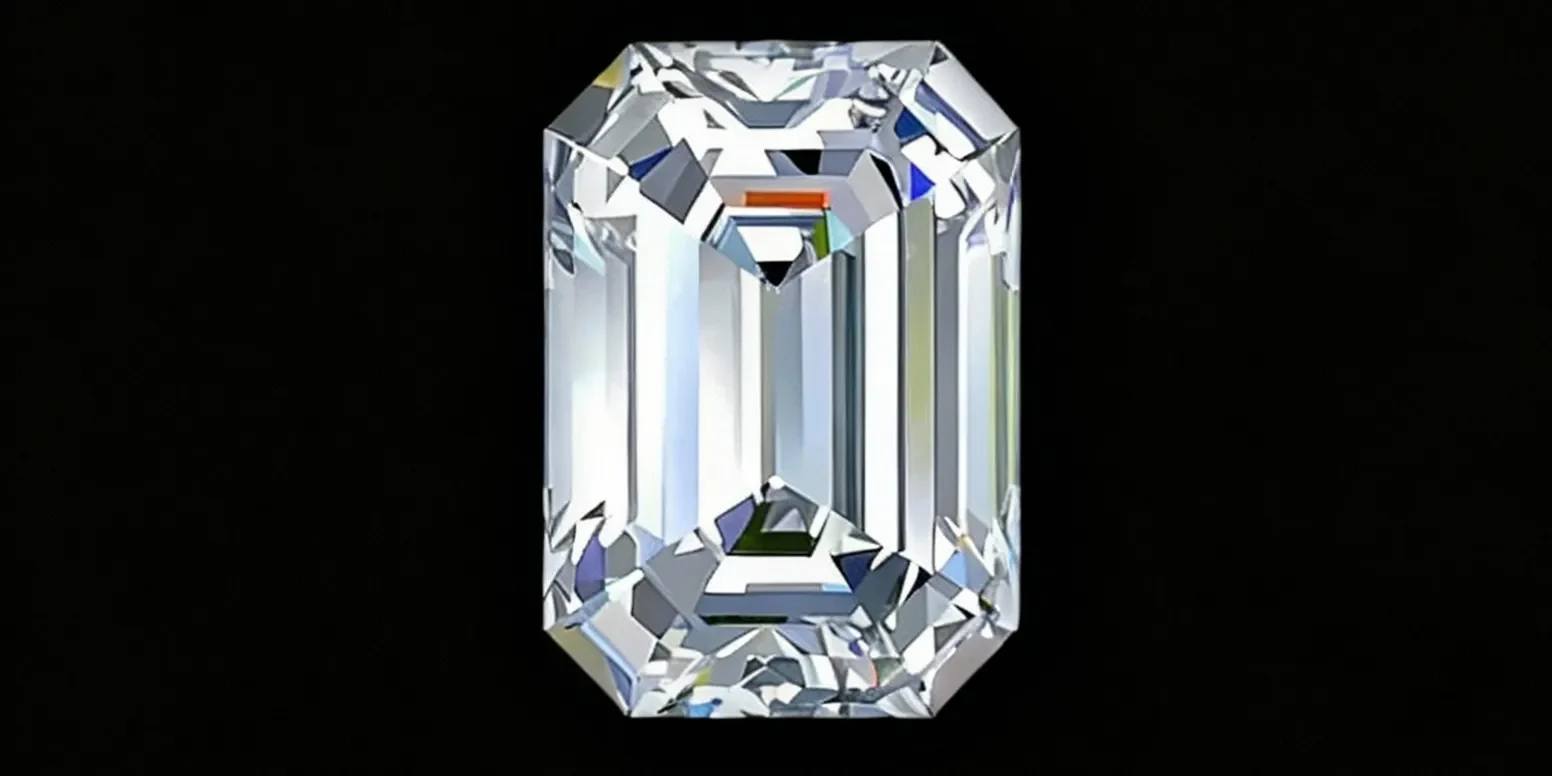
A sparkling emerald-cut diamond against a black background.

FINALISATION

ALL FACES ARE BESPOKE

We’re ready when you are. Get in touch below.

We prefer the beauty of cuts that are geometrical, difficult to find, and harder to produce. Scroll down to learn more about each one we use.

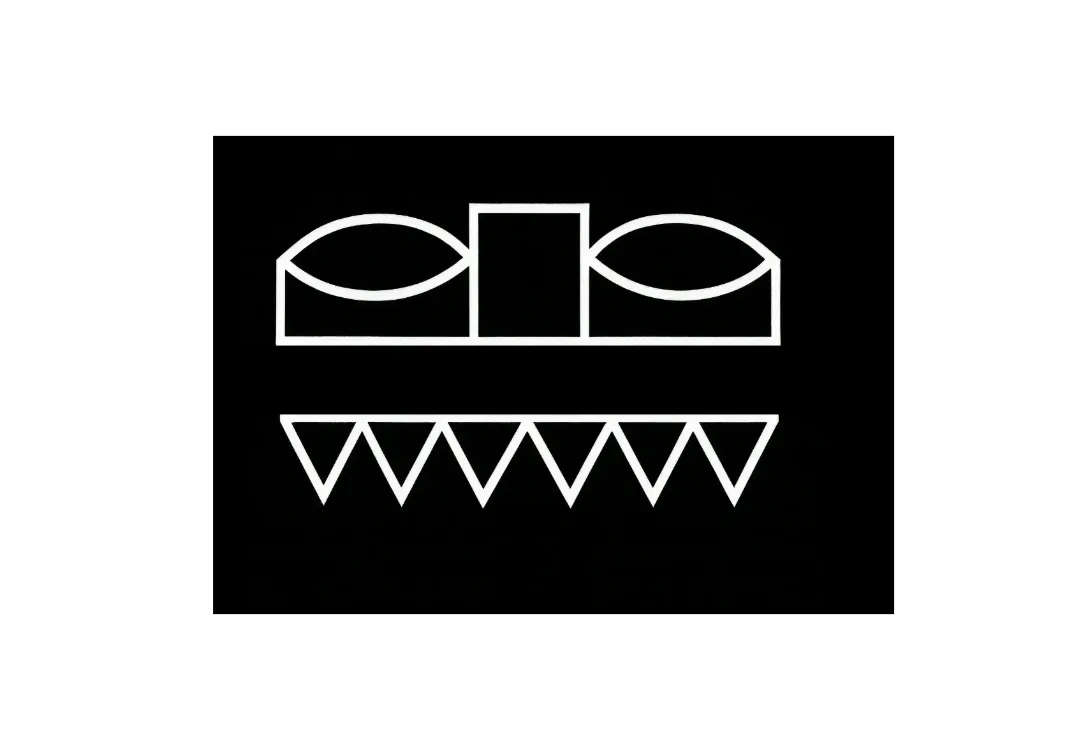
The rings in our Face collection are made up of three sections: EYES, TEETH, NOSE

Press the button to view a variety of combinations.

Close-up of a Louis Hira Face ring

MARQUISE-CUT EYES

This cut originates from 18th-century France, when King Louis XV commissioned diamonds to be cut in the shape of his mistress’ lips. Jeanne Antoinette Poissons was commonly referred to as ‘Marquise de Pompadour’, hence the creation of these elongated cuts with pointed ends. Although inspired by the lips of royalty, we prefer to use them as eyes!

TRILLION-CUT TEETH

Accurately and proportionally developing the modern trillion-cut (triangular) diamonds took centuries of iteration. Originally a technical nightmare for gemstone cutters, the technique was first proposed in the 18th century, and was finally mastered in the 1960s. We custom-cut each pointy, sharp trillion to form the perfect set of teeth.

RADIANT-CUT OR EMERALD-CUT NOSE

Emerald cuts date back to the 1500s. By clipping off the fragile corners of emeralds, this cut was made as a preventative measure to minimise damage. This style solidified its place as one of the most iconic during the 1920s for its clean symmetry and geometrical appearance.

In 1977, innovation to the emerald cut created the radiant cut. Applying brilliant-cut faceting (like that on a round diamond) to a rectangular, stepped-cut shape (like an emerald cut) created an unparalleled sparkle/brilliance. These display a unique ‘broken mirror’ effect: a beautiful blend of chaos and geometry.

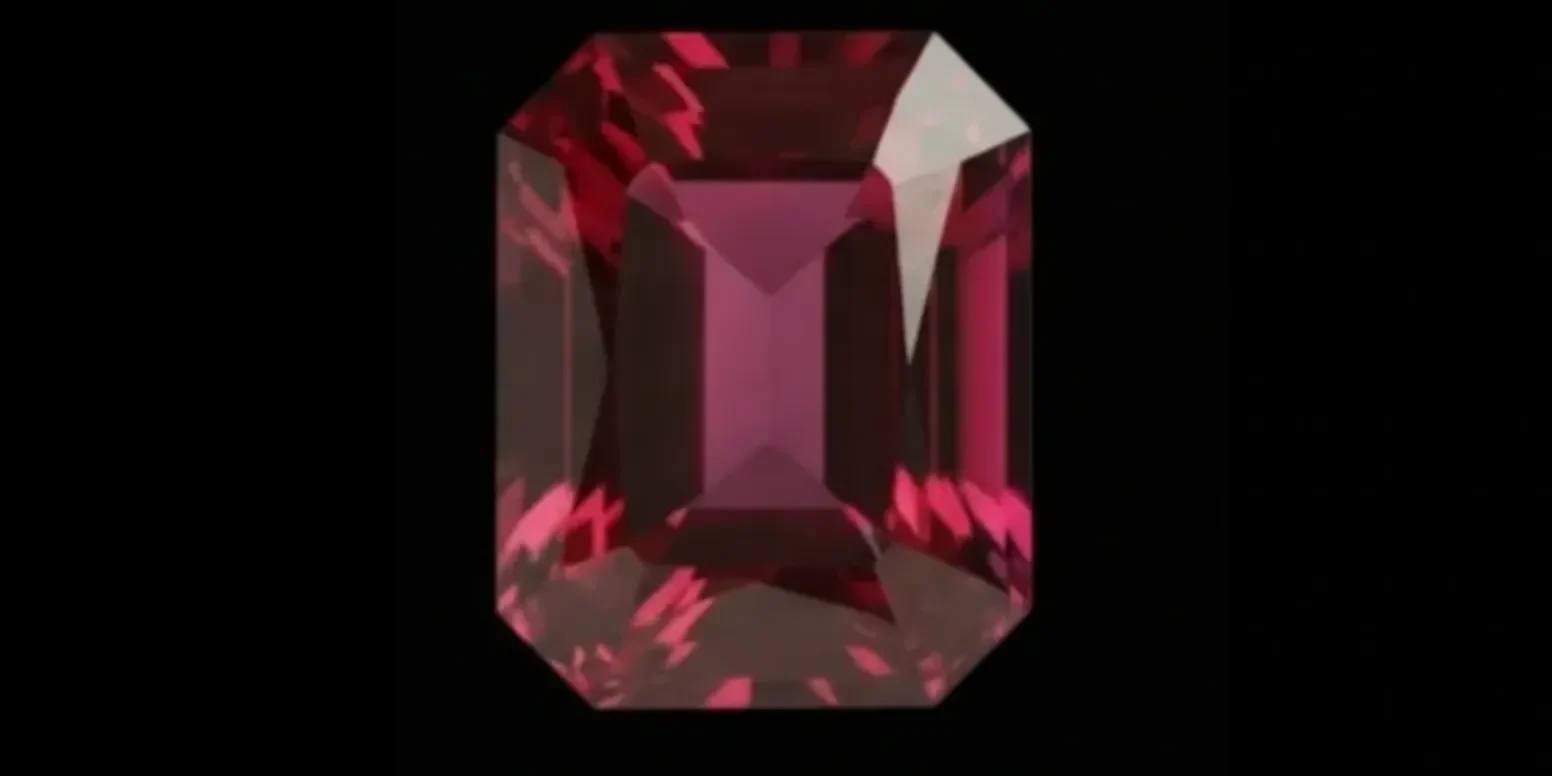
A radiant, emerald-cut red gemstone against a black background.

DIAMONDS

COLOUR D.
CLARITY FLAWLESS.

FACTS / TWO

DIAMONDS

You might be familiar with diamonds but, if you’re not, just know that it ultimately boils down to colour and clarity. These two factors crucially determine the quality, hence the value, of your diamonds.

FACTOR ONE

COLOUR

All our diamonds are in the highest bracket of the highest bracket (D, E, F). Pure colourless white diamonds are a D on the colour scale (True White).

FACTOR TWO

CLARITY

Our minimum is most people’s maximum. Our diamonds range from VVS2 (at a minimum) through to Flawless. This means that even under a microscope, all our diamonds are perfect.

See how these look on your Face.


FACTS / THREE

GEMSTONES

Everyone’s seen a diamond... but it’s our selection of investment-grade precious gemstones that really set us apart.

You will not find better. All our stones are meticulously selected from the best mines, spanning 20+ countries.

We pride ourselves on AAA Sri Lankan sapphires, pigeon blood Burmese rubies, and perfect Columbian emeralds, to name a few.

See the full range below.

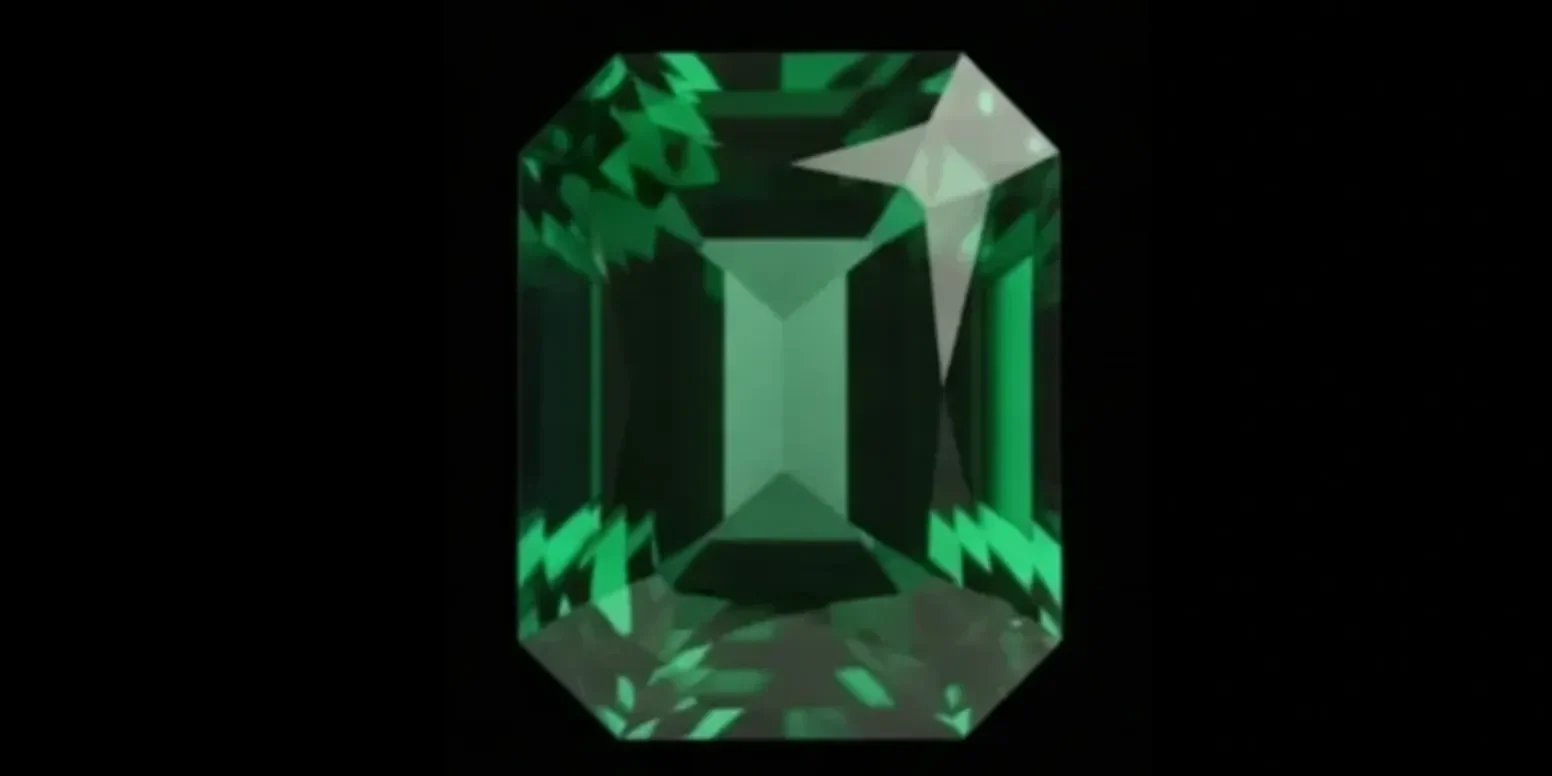
A radiant green emerald gemstone with a precise emerald cut.
Close-up of a deep blue emerald-cut gemstone on black background.

INVESTMENT GRADE

THE BEST MINES,
SPANNING 20+ COUNTRIES.

FACTS / FOUR

SIZES

No two Faces are the same, that’s true of life and of our rings. Unlike the one on your skull however, this one you can choose!

We leave the facial features (EYES, NOSE, TEETH) up to you, as well as your Frame (the colour and thickness of your metal).

The size of your band — the thickness of your ring — is personal preference. Some prefer a more streamlined 3mm, others opt for a show-stopping 5mm band.

Depending on the size of your band, the gemstone sizes will slightly differ, along with total metal weight. We really mean it when we say no two are the same. All rings are bespoke and made to order, hence all have slightly different measurements whilst maintaining the same aesthetic.

For specific sizings, please enquire.

ALL FACES ARE BESPOKE

MADE TO ORDER

We make to order, based on your chosen frame and facial features. We’re ready when you are. Get in touch below.

FIND AND FORM YOUR FACE

We’ll only use these details to reply to your enquiry. We don’t share them, and we don’t send marketing.

Thank you — your Face is on its way to us. We’ll be in touch shortly.

That didn’t send. Please check your connection and try again.

As no two Faces are the same, neither are the prices.

Different gemstones will always have different values, for example a pink diamond will be far more expensive than a white diamond of similar, or even higher quality — due to the immense rarity.

Even amongst a particular gemstone, rubies for example, value is heavily dependent on the quality, origin, and corresponding rarity of the stone. A Pigeon-Blood ruby from Myanmar can be multiple times the value of a random ruby from Thailand. As a result, even two rings with the same gemstone selections can have vastly different prices.

For these reasons, we’ve developed our unique pricing structure that’s partially within your control — based on the five tiers below.

TIER 1

£100,000+

TIER 2

£50,000–100,000

TIER 3

£25,000–50,000

TIER 4

£10,000–25,000

TIER 5

£1,000–10,000

FINALISATION

ALL FACES ARE BESPOKE

We’re ready when you are. Get in touch below.

THE FACE COLLECTION

FORGE YOUR FACE

Frame first — width, metal and finger size. Then the features. Every stone you see is the real cut, set in the real frame. Turn it, take it in, and send it to us.

Your Face, rendered
Preparing your Face

Ray‑traced · every stone shown as it is cut

Happy with your Face?

Send it over and we’ll come back to you with a quote. It takes a moment — we only need a name and an email.

Elegant silver ring with a blue emerald-cut gemstone and diamond accents.

3.94ct TOTAL

DIAMOND EYES.
DIAMOND TEETH.
SAPPHIRE NOSE.

EYES

THE EYES

LEFT EYE

Type

Natural Diamond

Cut

Marquise Brilliant (GIA laser inscribed)

Weight

0.76ct

Colour

D

Clarity

Internally Flawless (IF)

Measurements

9.37 x 4.84 x 3.00mm

Polish / Symmetry

Excellent / Excellent

Fluorescence

None (This is a good thing!)

RIGHT EYE

Type

Natural Diamond

Cut

Marquise Brilliant (GIA laser inscribed)

Weight

0.74ct

Colour

D

Clarity

Internally Flawless (IF)

Measurements

9.49 x 4.81 x 2.74mm

Polish / Symmetry

Excellent / Excellent

Fluorescence

None

Combined EYES Carat weight (x2) — 1.50ct


TEETH

THE TEETH

EACH TOOTH

Type

Natural Diamond

Cut

Trillion (Custom cut)

Weight

0.1ct (each)

Colour

D

Clarity

VVS1

Measurements

3 x 3 x 3mm

Combined TEETH Carat Weight (x6) — 0.60ct

Close-up of a silver ring setting without stones on a black background.

PLATINUM 950

24.9 GRAMS.
5mm BAND.

NOSE

THE NOSE

Type

Natural, No-Heat, Untreated, Sri Lankan Sapphire

Cut

Emerald cut

Weight

1.84ct

Colour

Vivid Royal Blue

Clarity

AAA Eye Clean (EC)

Measurements

7.7 x 5.8 x 4.2mm

METAL

THE METAL

Type

Platinum 950 (Polished)

Weight

24.9 grams

Band Size

5mm

Colour

White / Silver


SUMMARY

THE NUMBERS

Total Diamond Carat Weight

2.1ct

Total Sapphire Carat Weight

1.84ct

Total Carat Weight

3.94ct

Price

This ring was in our Tier 2

THIS PAGE IS UPDATED WEEKLY

FINALISATION

ALL FACES ARE BESPOKE

We’re ready when you are. Get in touch below.

FACETS

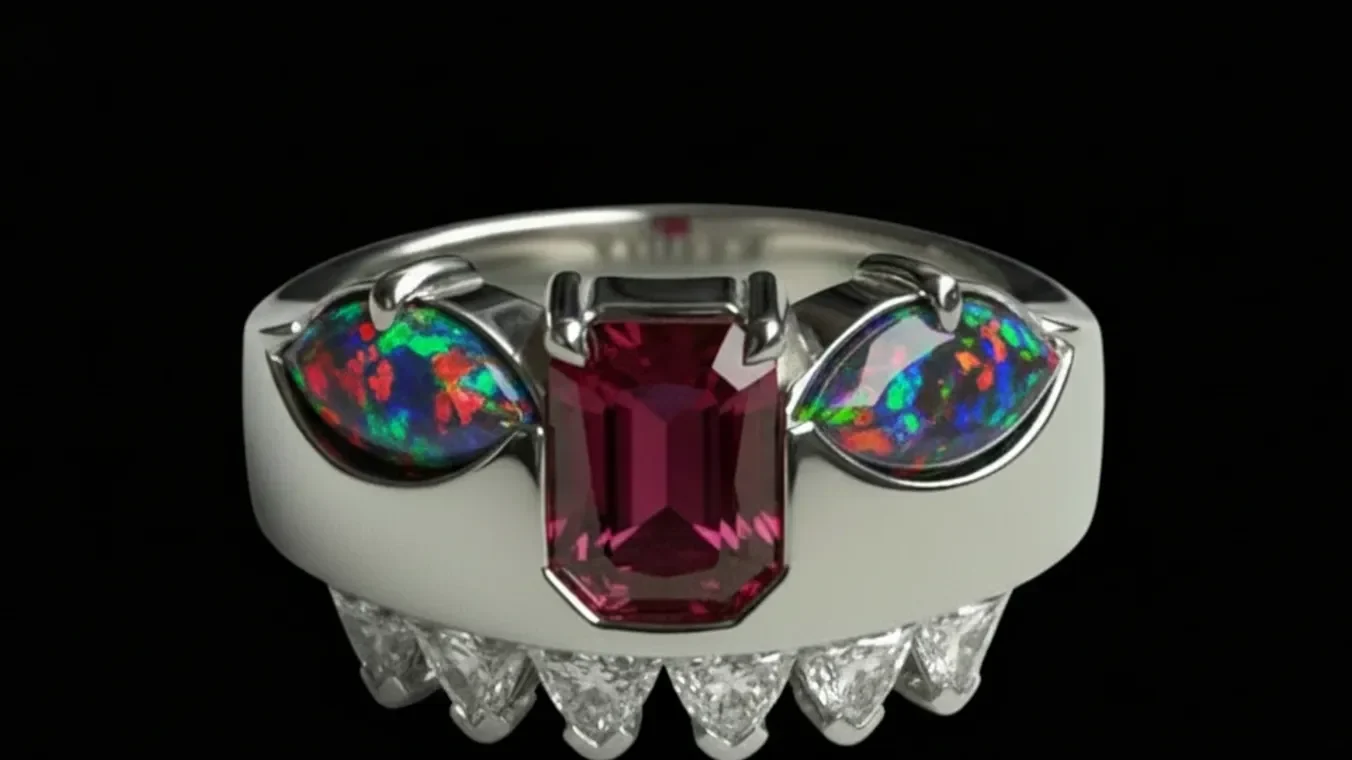
A platinum ring set with two marquise-cut boulder opals flanking an emerald-cut ruby.

Faceting is the process of cutting gemstones. How a gem is faceted is synonymous with how it’s shaped, and quite literally how it shines!

Read on for more fascinating facet information.

Each custom gemstone undergoes rigorous testing and inspection by our master gemologists, ensuring that only the finest facets reach your face.

Certain gems are more popular choices for specific facial features than others. Below is our range of six primary gemstones, and you can click through each one for more information.

But we also like to be unconventional, so a more comprehensive selection of gems is available on request.

SIX PRIMARY GEMSTONE CHOICES

FINALISATION

ALL FACES ARE BESPOKE

We’re ready when you are. Get in touch below.

01

DIAMOND / SAPPHIRE / DIAMOND
Classic, our signature design. No EYES shine brighter.

02

RUBY / SAPPHIRE / DIAMOND

03

SAPPHIRE / SAPPHIRE / SAPPHIRE

04

EMERALD / YELLOW DIAMOND / SAPPHIRE

05

YELLOW DIAMOND / YELLOW DIAMOND / YELLOW DIAMOND

06

BLACK DIAMOND / YELLOW DIAMOND / YELLOW DIAMOND

07

OTHER DIAMOND (PINK AND BLUE) / OTHER DIAMOND (PINK AND BLUE) / OTHER DIAMOND (PINK AND BLUE)

08

OPAL (AND BLACK OPAL) / OTHER DIAMOND (PINK AND BLUE) / OTHER DIAMOND (PINK AND BLUE)

09

PARAIBA TOURMALINE / OTHER DIAMOND (PINK AND BLUE) / PARAIBA TOURMALINE

10

ALEXANDRITE / OTHER SAPPHIRE (PINK AND TEAL) / PARAIBA TOURMALINE

11

TANZANITE / OTHER SAPPHIRE (PINK AND TEAL) / OTHER SAPPHIRE (PINK AND TEAL)

12

OTHER SAPPHIRE (PINK AND TEAL) / OTHER SAPPHIRE (PINK AND TEAL) / OTHER SAPPHIRE (PINK AND TEAL)

Elegant ring with colorful opals, a red gemstone, and diamond accents on a silver band.

UNCONVENTIONAL

A MORE COMPREHENSIVE
SELECTION ON REQUEST.

FINALISATION

ALL FACES ARE BESPOKE

Made to order based on your chosen Frame and Facial Features. We’re ready when you are, get in touch below!

FIND & FORM YOUR FACE

We’ll only use these details to reply to your enquiry. We don’t share them, and we don’t send marketing.

Thank you — your Face is on its way to us. We’ll be in touch shortly.

That didn’t send. Please check your connection and try again.

DIAMOND DOCUMENTATION

Diamonds are older than life on Earth

Many diamonds formed 1–3 billion years ago. To put this into perspective, this was long before dinosaurs, trees, and life.

Ancient diamonds were worn uncut

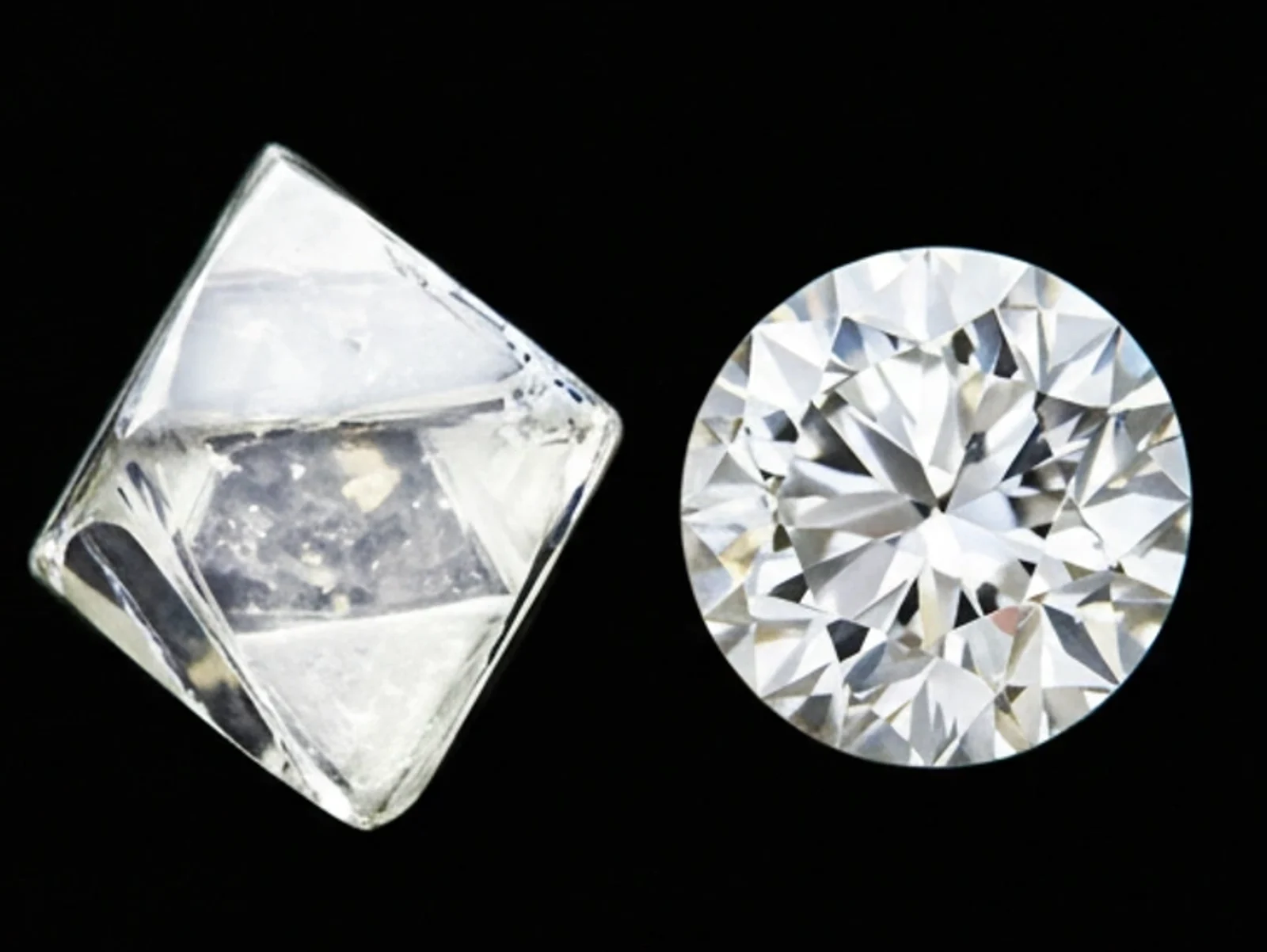
For centuries, diamonds were kept in their natural octahedral form, which is how they look when pulled out of the ground. Cutting diamonds for shine and brilliance didn’t become standard until the Renaissance. Before that, raw geometry was the luxury, and they were prized for hardness and symbolism, not the sparkle! Modern, shiny, ‘ice-white’ obsession is only a 20th-century invention.

The largest diamonds mined are rarely the most valuable

Massive diamonds are often brown, included, or structurally weak. The most valuable diamonds balance size, purity, colour, and narrative — not simply scale.

A sparkling emerald-cut diamond against a black background.

RARITY

9/10

For exceptional diamonds. Diamonds are geologically not too uncommon. However, large, colourless, flawless, or fancy-colour diamonds (pink, blue, red) are extremely rare. Only 20–30% of all diamonds mined meet the standards for gem quality. Flawless/Internally Flawless diamonds constitute less than 1% of all gem-quality diamonds.

VALUE

8/10

Diamonds have been, are, and will continue to be the most recognised, demanded and classic gemstone worldwide.

A sparkling emerald-cut diamond against a black background.

DIAMOND

UNCONQUERABLE.

GEMSTONE FAMILY

Diamonds are in a class of their own, made of pure super-compressed carbon, arranged in a crystal lattice. Diamonds form when pure carbon is subjected to both extreme heat and pressure, roughly 150 to 200 kilometres deep in the Earth’s mantle.

EARLIEST USAGE

The earliest recorded usage of diamonds was in India, during the 4th century BC. They are referenced in ancient Sanskrit texts such as the Arthashastra.

The word diamond comes from Greek ‘adamas’, meaning unconquerable.


SIGNIFICANT DEPOSITS

WHERE THEY COME FROM

South Africa

Kimberley Mine (The Big Hole), is the birthplace of the modern pit-mining industry. The mine reaches a final depth of 1,097 metres (3,599 feet).

Botswana

Jwaneng Mine. Currently the most valuable diamond mine on Earth by value.

India

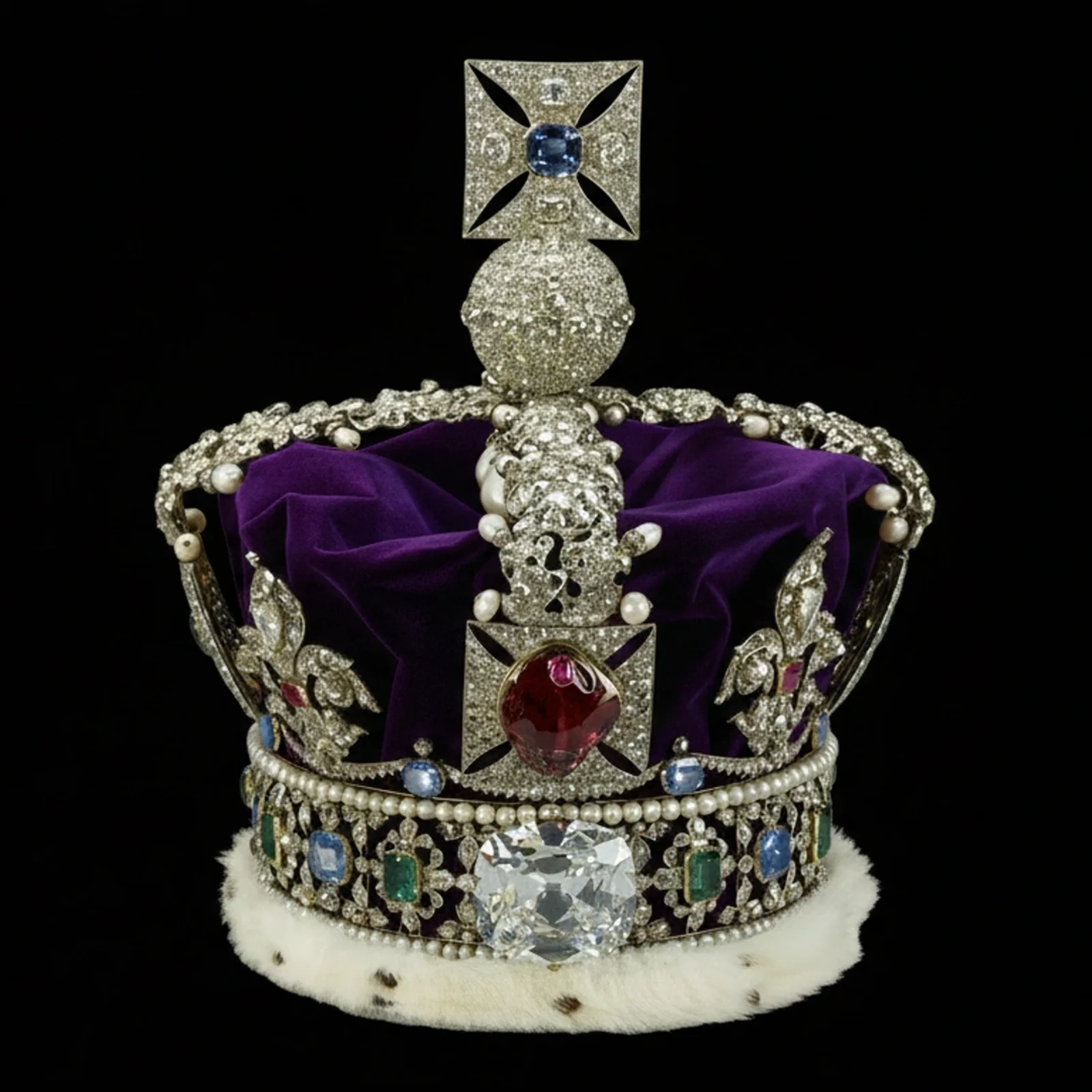
Golconda. Source of the world’s most legendary diamonds until the 18th century. The Koh-i-Noor weighs 105.6 carats and is now the central stone of the British Crown Jewels. The Cullinan (estimated $2 Billion) is the largest gem-quality rough diamond ever found (3,106 carats).

Russia

Mirny Mine. Massive open-pit mine, visible from space.

Canada

Ekati & Diavik highly ethically positioned mines, producing high-clarity stones.

FINALISATION

ALL FACES ARE BESPOKE

We’re ready when you are. Get in touch below.

RUBY REVELATIONS

Ruby is technically a sapphire

Both rubies and sapphires belong to the corundum family, with the key distinction being their chromium content — the element responsible for the ruby’s striking red hue. When the chromium content is sufficient, it results in a ruby; insufficient amounts yield a sapphire. This colour differentiation is what defines the category of these gemstones.

Rubies were once more valuable than diamonds

In both ancient India and medieval Europe, the unique ruby characteristics led people to believe that these gemstones contained an inner fire, elevating their status above all other gems, including diamonds.

Many historic ‘rubies’ are not rubies at all

Prior to the advent of modern gemological testing, numerous ‘rubies’ found in royal collections were actually spinels, which are notably less valuable. This includes the well-known Black Prince’s Ruby in the British Crown Jewels, showcasing how gemstone rarity can sometimes be misleading.

A radiant, emerald-cut red gemstone against a black background.

RARITY

8/10

Fine-quality rubies (especially Burmese) are exceptionally rare. Large, clean rubies over 3 carats are rarer than diamonds of the same size.

VALUE

9/10

Top-tier rubies can exceed £1,000,000 per carat. Prices rival, or even surpass, blue diamonds at the highest level. The Estrela de Fura, a 55.22-carat Mozambican ruby, sold for £28 million in 2023.

A radiant, emerald-cut red gemstone against a black background.

RUBY

KING OF GEMS.

GEMSTONE FAMILY

Rubies are members of the corundum mineral family. They are composed of crystalline aluminium oxide (Al₂O₃), the same as sapphires!

Rubies are formed under intense heat and pressure deep within the Earth’s crust. Their formation is a particularly rare geological event as it requires an environment rich in aluminium, but low in silica and iron.

EARLIEST USAGE

The earliest recorded usage of rubies was in ancient India, 200 BC. They’re referred to in ancient Sanskrit texts under the name ‘Ratnaraj’, or King of Gems. Rubies were believed to protect warriors in battle, guaranteeing rebirth as an emperor.

This makes ruby one of the earliest documented gemstones in human history.


SIGNIFICANT DEPOSITS

WHERE THEY COME FROM

Myanmar (Formally Burma)

The Mogok Valley is historically recognized as the most prized source of rubies, renowned for its deep red ‘pigeon blood’ rubies, which exemplify the pinnacle of gemstone rarity and are considered the most valuable and desired quality.

Mozambique

Discovered in 2009, the Montepuez Ruby Mine has quickly become one of the most significant modern ruby deposits, arguably the second most valuable in the world.

Sri Lanka (Ceylon)

The Ratnapura region is known for producing lighter-toned, pinkish-red rubies with unique ruby characteristics that distinguish them from other sources.

Thailand

Historically, Chanthaburi and Trat served as crucial hubs for trading and heat treatment, a process used to artificially enhance the colour and clarity of rubies, further establishing their ruby trade.

Madagascar

Andilamena is celebrated for its vibrant ruby colours, although the clarity can be variable and often unreliable, impacting the overall quality of the gemstone.

FINALISATION

ALL FACES ARE BESPOKE

We’re ready when you are. Get in touch below.

SAPPHIRE STATISTICS

Not all sapphires are blue

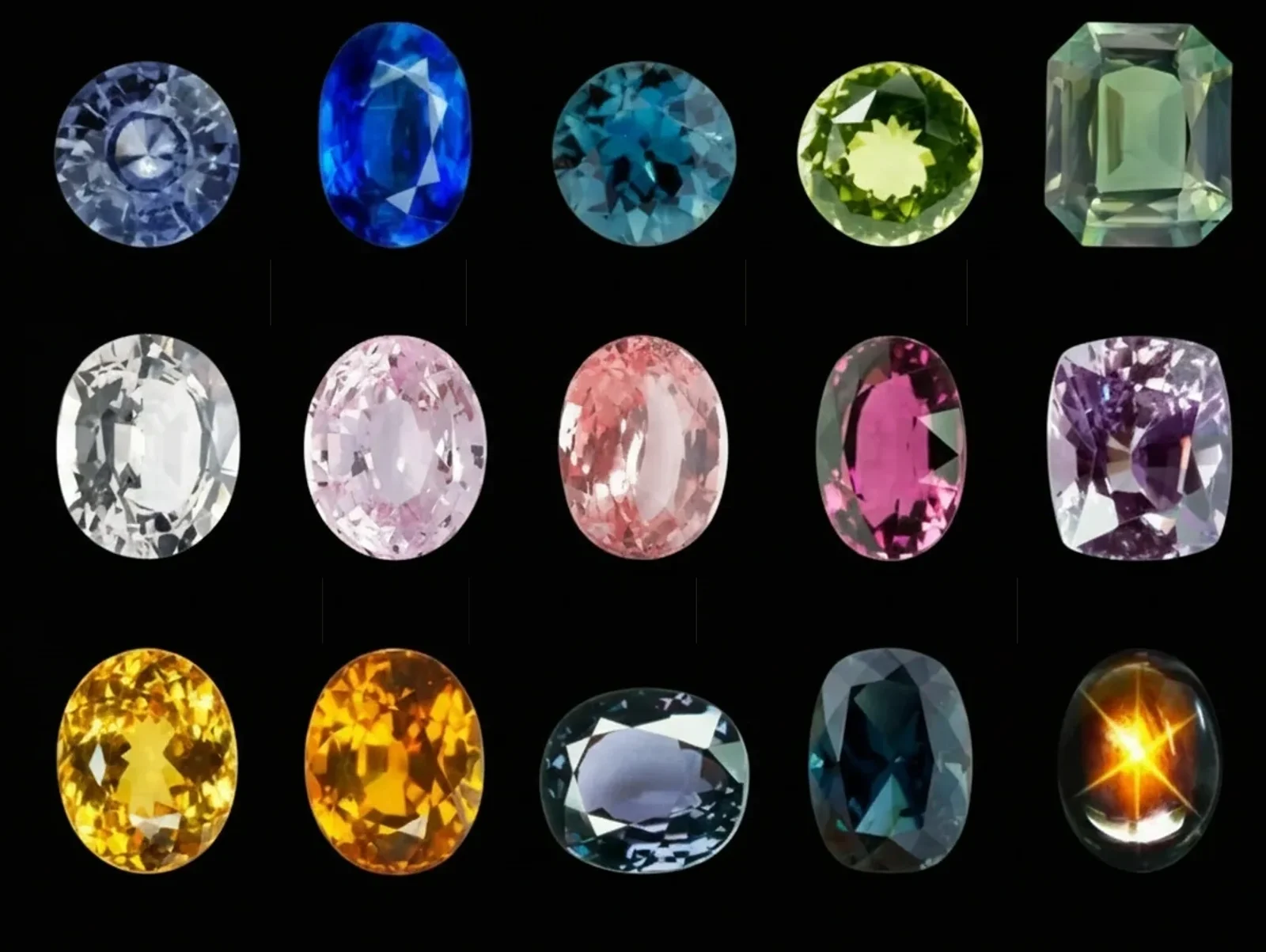
In fact quite the opposite! Sapphires come in more colours naturally than any other gemstone. Every colour of corundum except red is sapphire (when red it’s claased as a ruby) and pink, yellow, green, orange, and recently teal are all popular jewellery options.

Sapphire was believed to protect against envy and harm

Medieval kings wore sapphires as they believed it guarded against poisoning and betrayal. For them, sapphire wasn’t decorative, it was strategic.

Sapphire is second only to diamond in hardness

On the Mohs hardness scale, sapphire is a 9 (diamonds are 10, the maximum). This is why it’s so commonly used in luxury watches.

Synthetic sapphire is so hard, its also used for smartphone camera lenses, and even in aerospace optics.

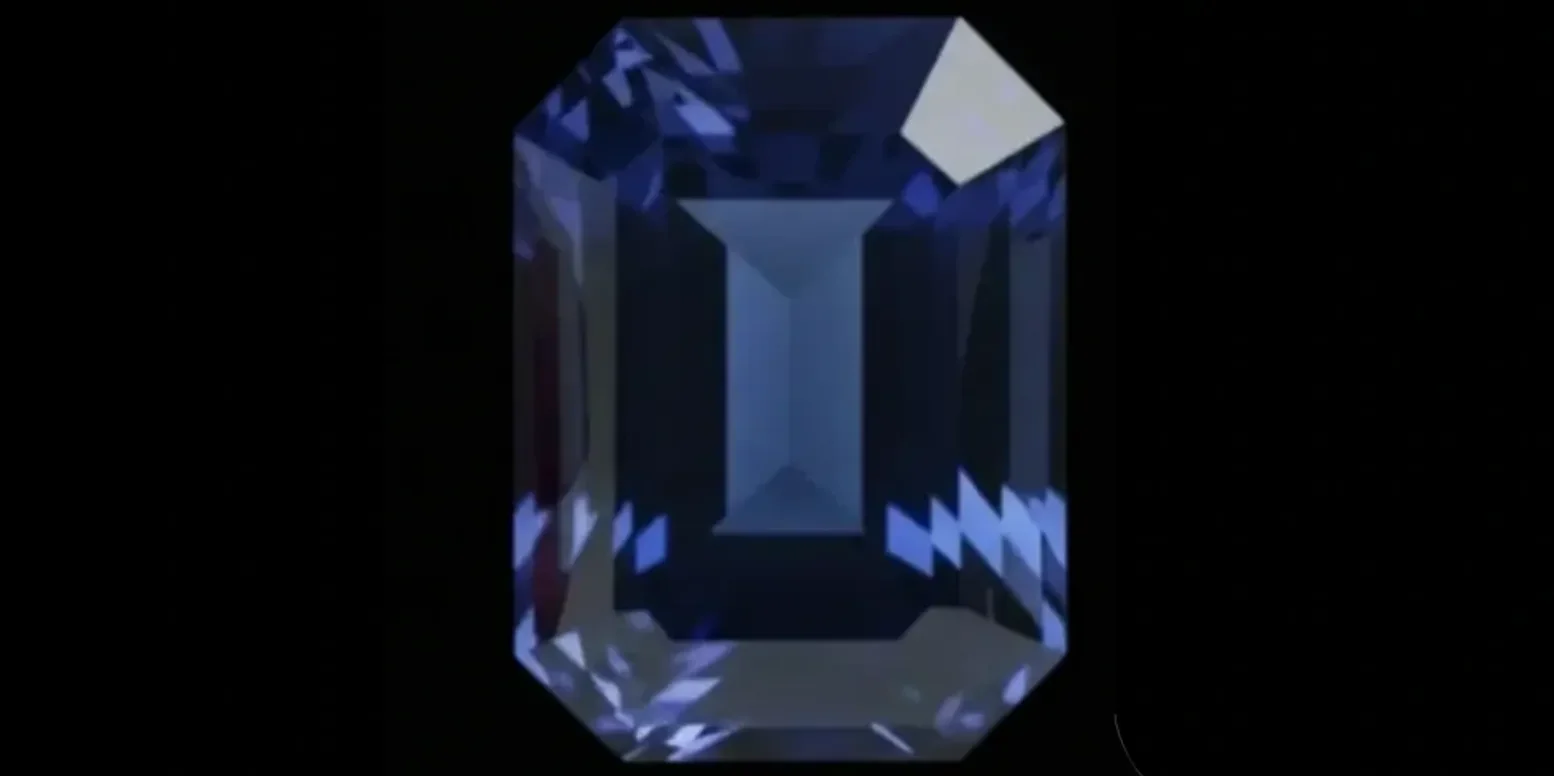
Close-up of a deep blue emerald-cut gemstone on black background.

RARITY

7/10

Sapphires are more common than rubies and emeralds. However, untreated vivid blue sapphires from Sri Lanka, Kashmir or Burma are extremely rare. Untreated means they look like this when they come out the ground — no heating or artificial enhancements.

VALUE

7/10

Fine sapphires can reach six figures per carat. They have a strong resale value due to their durability and timeless demand. In fact, investment-grade sapphires had the biggest proportional price increase in both 2024 and 2025.

Close-up of a deep blue emerald-cut gemstone on black background.

SAPPHIRE

WISDOM AND HEAVEN,
FOR 2,000 YEARS.

GEMSTONE FAMILY

Sapphires belong to the corundum mineral family, the same as rubies. They are formed of aluminium oxide (Al2O3).

Sapphires contain trace amounts of iron and titanium to give them their blue colour. Sapphires form 6 to 18 miles underground when intense heat (800°C–2,000°C) and pressure force aluminium and oxygen to crystallise. This requires a rare, silica-poor environment. Over millions of years, these crystals are pushed to the surface by tectonic shifts, or volcanic activity, where they are usually found in riverbeds.

EARLIEST USAGE

The earliest recorded usage of sapphires was in Ancient Persia 500–300 BC. Persians even believed that the sky was blue because it reflected a giant sapphire beneath the Earth.

Sapphires are also extensively referenced in Greek and Roman texts, and even the Bible, associated with divine favour and truth.

Ultimately sapphire has been associated with wisdom and heaven for well over 2,000 years.


SIGNIFICANT DEPOSITS

WHERE THEY COME FROM

Sri Lanka (Ceylon)

Ratnapura produces blue, pink, yellow, and white sapphires, some of the most transparent, prized sapphires in the world.

Kashmir (India)

Kashmir sapphire mines, in the Padar region, are legendary, but unfortunately now the mines are virtually exhausted. They’re known for the mythical ‘cornflower blue’ with a unique, velvety glow.

Myanmar (Burma)

Mogok Valley produces deep, royal blue sapphires with exceptionally strong saturation. A true classic aesthetic.

Madagascar

Ilakaka & Andranondambo emerged as a modern supplier, with a wide colour range, but fairly inconsistent quality.

USA (Montana)

Yogo Gulch is home to naturally deep blue stones that often need no heat treatment. Fine colour, typically not so fine clarity/quality.

FINALISATION

ALL FACES ARE BESPOKE

We’re ready when you are. Get in touch below.

EMERALD ELEMENTS

Cleopatra was obsessed with emeralds

She frequently wore emerald, claimed ownership of the Egyptian Empires’ emerald mines, and gifted engraved emeralds to foreign dignitaries.

Arguably the first example of gemstones being used to display political power, and gems being used to signify status.

Emeralds are more fragile than diamonds

Despite being relatively hard, emeralds are brittle. Ancient cutters shaped them to protect the stone — which is what formed the iconic emerald cut — now commonly used for a wide display of gemstones.

The conquistadors’ quest

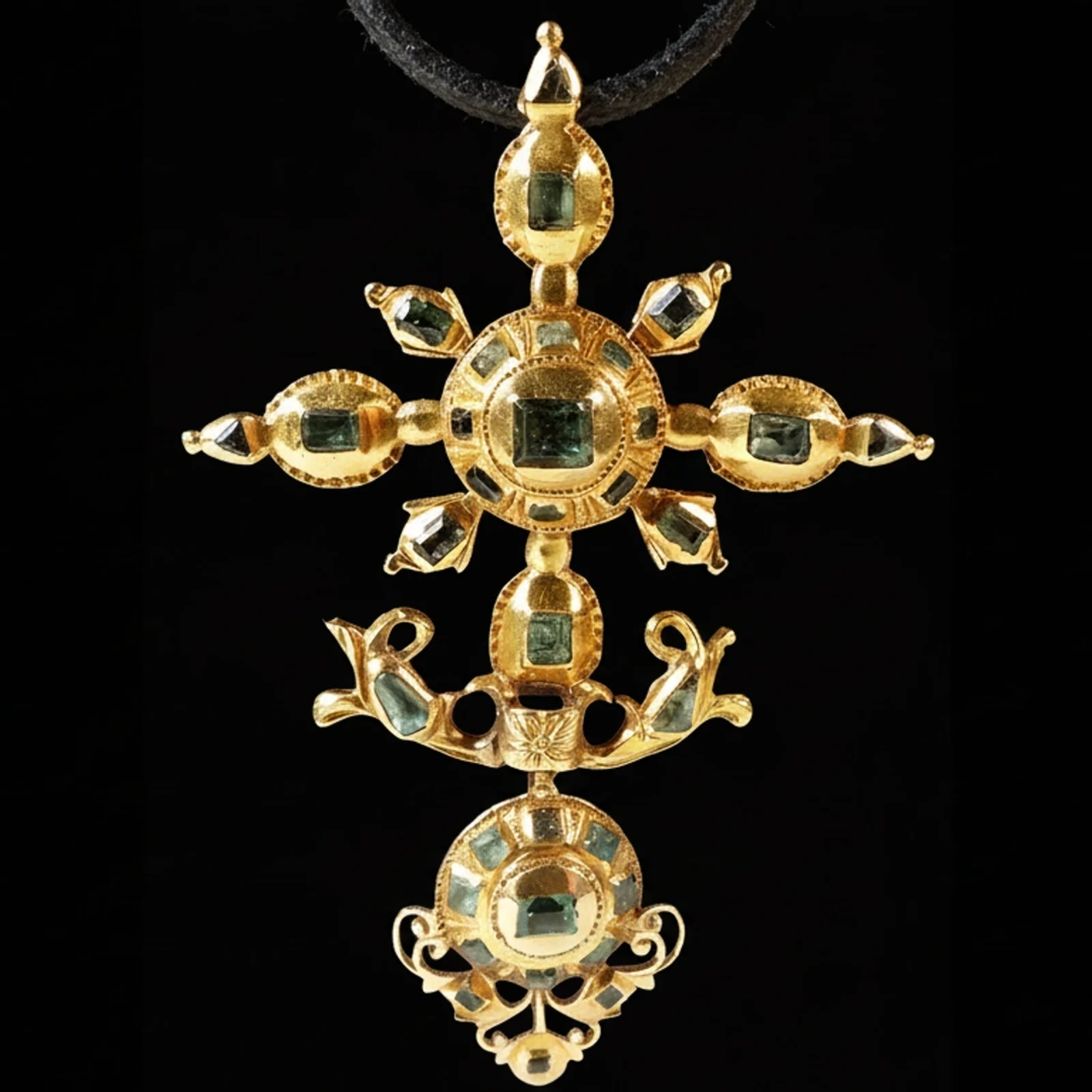
In the 16th century, Spanish conquistadors discovered that the true wealth of South America was not just held in gold, but in vast deposits of high-quality emeralds. This sparked what’s known as ‘green fever’ (fiebre verde) in 1537. Ultimately, a large part of why South America speaks Spanish is a result of the conquistadors’ quest to own and control the emeralds.

A radiant green emerald gemstone with a precise emerald cut.

RARITY

7/10

Emeralds are geologically rare. Fine, deep green colour, with good transparency is even less common, and often considered more difficult to find and comparibly more valuable than diamonds in larger, higher-clarity specimens.

VALUE

8/10

Top Colombian emeralds rival rubies and diamonds in price. Exceptional stones sell for hundreds of thousands per carat. The market strongly favours untreated, or less treated stones. Most emeralds have some degree of oil applied to reduce the inclusions.

A radiant green emerald gemstone with a precise emerald cut.

EMERALD

A GEOLOGICAL MIRACLE.

GEMSTONE FAMILY

Emeralds belong to the beryl family of minerals (Be3Al2(SiO3)6). They get their green colour from trace amounts of chromium and sometimes vanadium. Other famous members of the beryl family include aquamarine, morganite, and red beryl.

Emerald formation is often referred to as a ‘geological miracle’, requiring superheated fluids to collide rare beryllium with deep-earth minerals chromium (and sometimes vanadium), which normally never meet.

Commonly recognised rankings in value by country: 1) Columbia  2) Zambia  3) Brazil  4) Afghanistan and Pakistan  5) Others, like Ethiopia and Russia

EARLIEST USAGE

Emeralds’ usage traces back to Ancient Egypt, a staggering 1500 BC, mined at Mons Smaragdus (Cleopatra’s Mines). They were used by Egyptians, Greeks, and Romans as symbols of fertility, rebirth and eternal youth.


SIGNIFICANT DEPOSITS

WHERE THEY COME FROM

Colombia

The holy grail of emeralds. The Muzo Mine produces the most saturated, velvety, deep green emeralds in the world — reflected in their immense value. The Chivor Mine produces slightly cooler, bluish-green stones with exceptional transparency, as well as the Coscuez Mine, with immense historical significance, and intense colour.

Zambia

The Kagem Mine unearths darker, cooler-toned emeralds with exceptionally high clarity, yet they are less valuable than their Columbian counterparts due to higher supply.

Brazil

Minas Gerais, Bahia produces lighter-green coloured, often very clean (inclusion-free) stones, but often lack that depth of colour associated with top-tier stones.

Afghanistan

The Panjshir Valley is home to some highly-prized and scarce emeralds, often with unique inclusions. These are politically difficult to source.

Ethiopia

The Shakiso deposit was accidentally discovered in August 2016, by two brothers searching for the metal tantalum, using only their hand tools, in Southern Ethiopia. This newer source has amazingly vivid colour, and is rapidly gaining prestige in the emerald rankings!

FINALISATION

ALL FACES ARE BESPOKE

We’re ready when you are. Get in touch below.

YELLOW DIAMOND DOCUMENTATION

Yellow diamonds get their colour from the additional presence of nitrogen

The richer the nitrogen concentration, the deeper and more saturated the yellow. The more saturated the yellow colour is, the more valuable, and rare. Intensity is everything.

Cutting a yellow diamond is about trapping colour, not light

Unlike white diamonds (which chase brilliance), yellow diamonds are cut to concentrate colour. A bad cut can wash them out completely. Essentially the priority leans far more towards colour than ‘shine’.

‘Canary’ isn’t a scientific term, it’s marketing

You might have heard the phrase ‘canary yellow’ thrown around when describing yellow diamonds. Canary diamonds are simply high-saturation fancy yellow diamonds, not a specific diamond grade. The name stuck because it’s catchy, that’s it.

HOW GRADING WORKS

Yellow diamonds are not graded on the traditional colourless D–Z scale once their colour becomes strong enough. At this stage, when there’s a higher concentration of yellow than that of a Z colour ‘white’ diamond, they are classified as ‘fancy coloured’ diamonds — evaluated primarily on colour intensity, and this becomes the most important factor driving the value, and demand. This refers to the depth, purity, and concentration of yellow within the stone.

Weaker ‘yellow’ coloured diamonds are just white diamonds, with low colour ratings, X, Y, Z etc. This is known as unintentional colour presence.

The stones progress from ‘light yellow’, through to deep, ‘canary’, fancy vivid yellow (FVY).

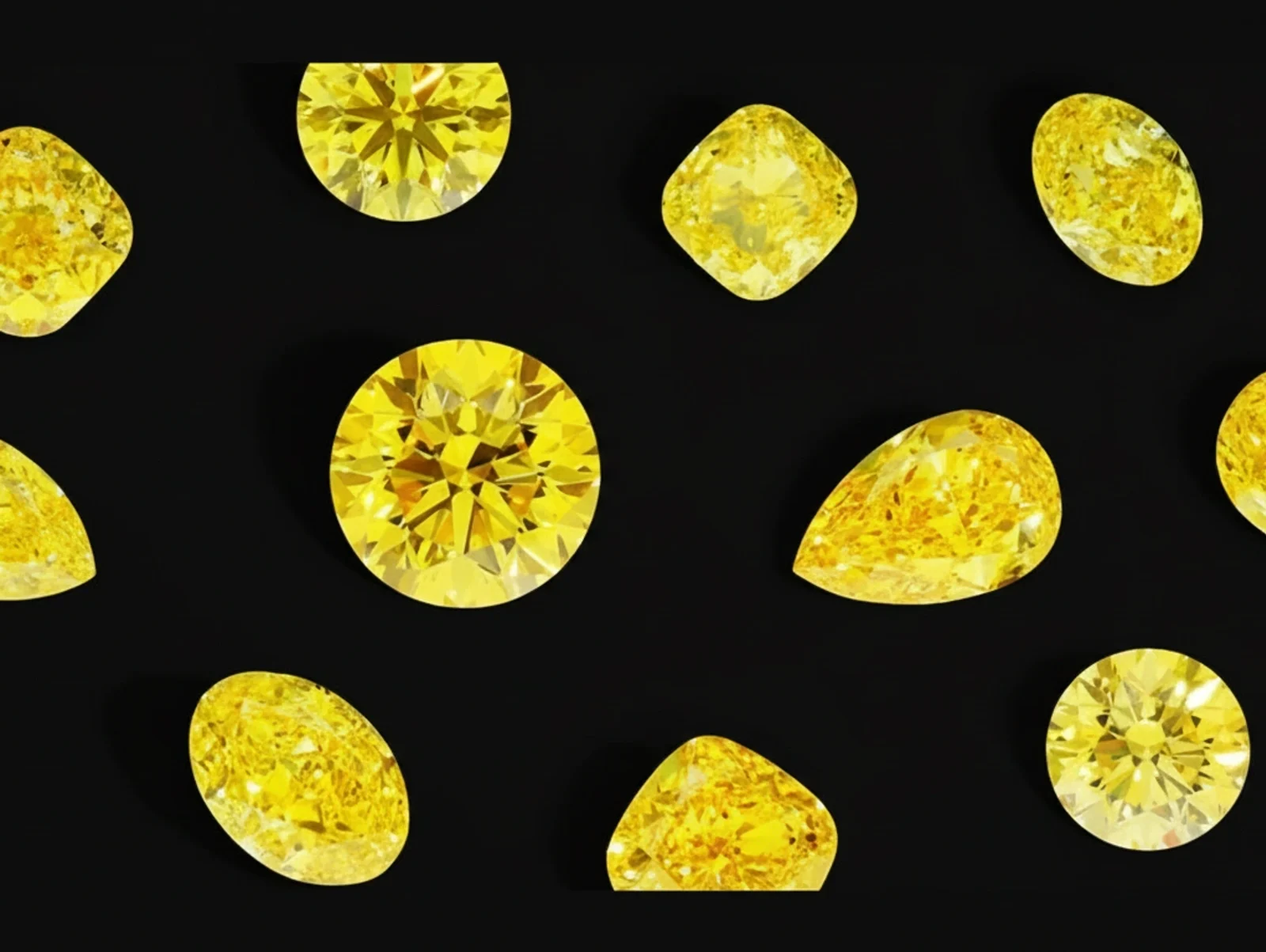
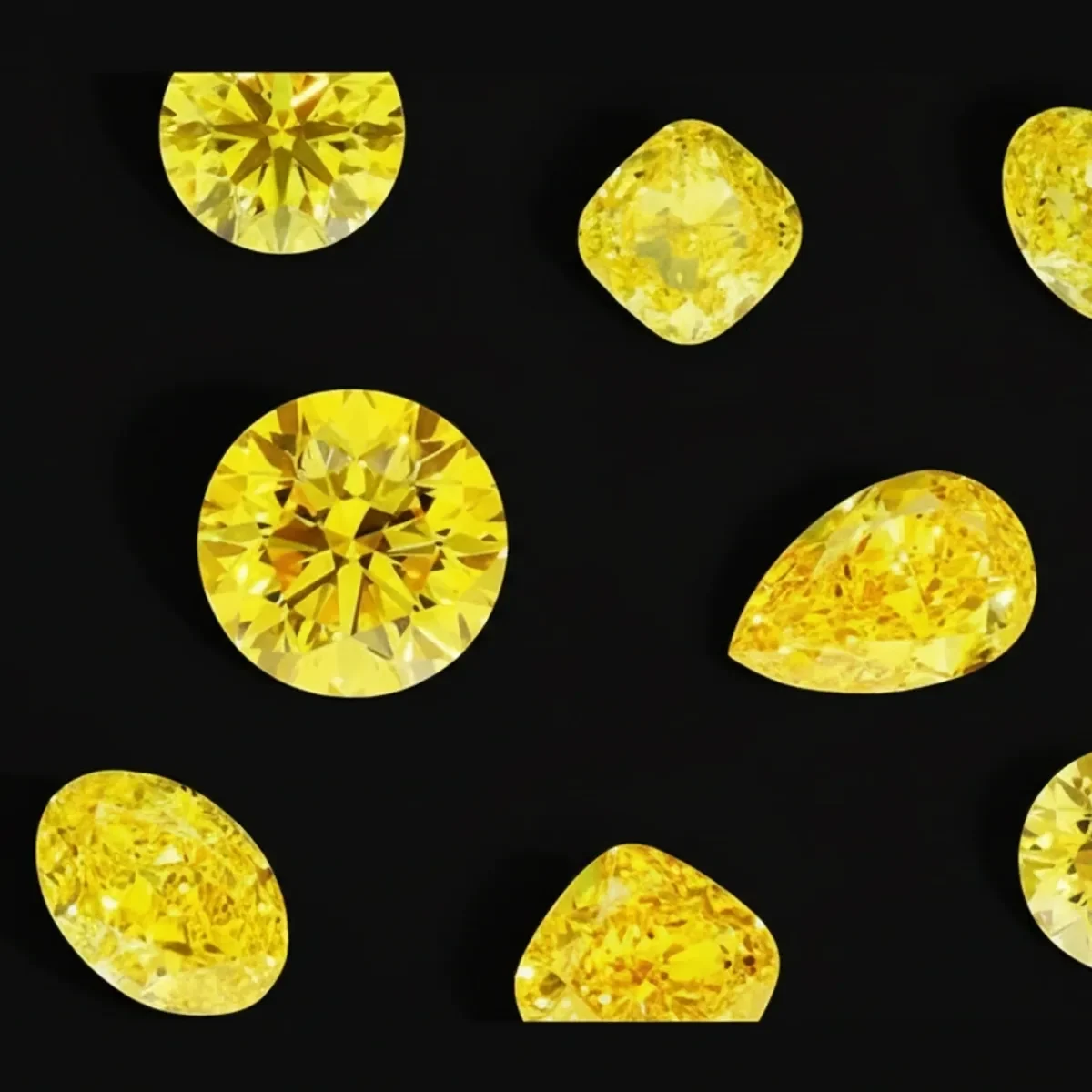
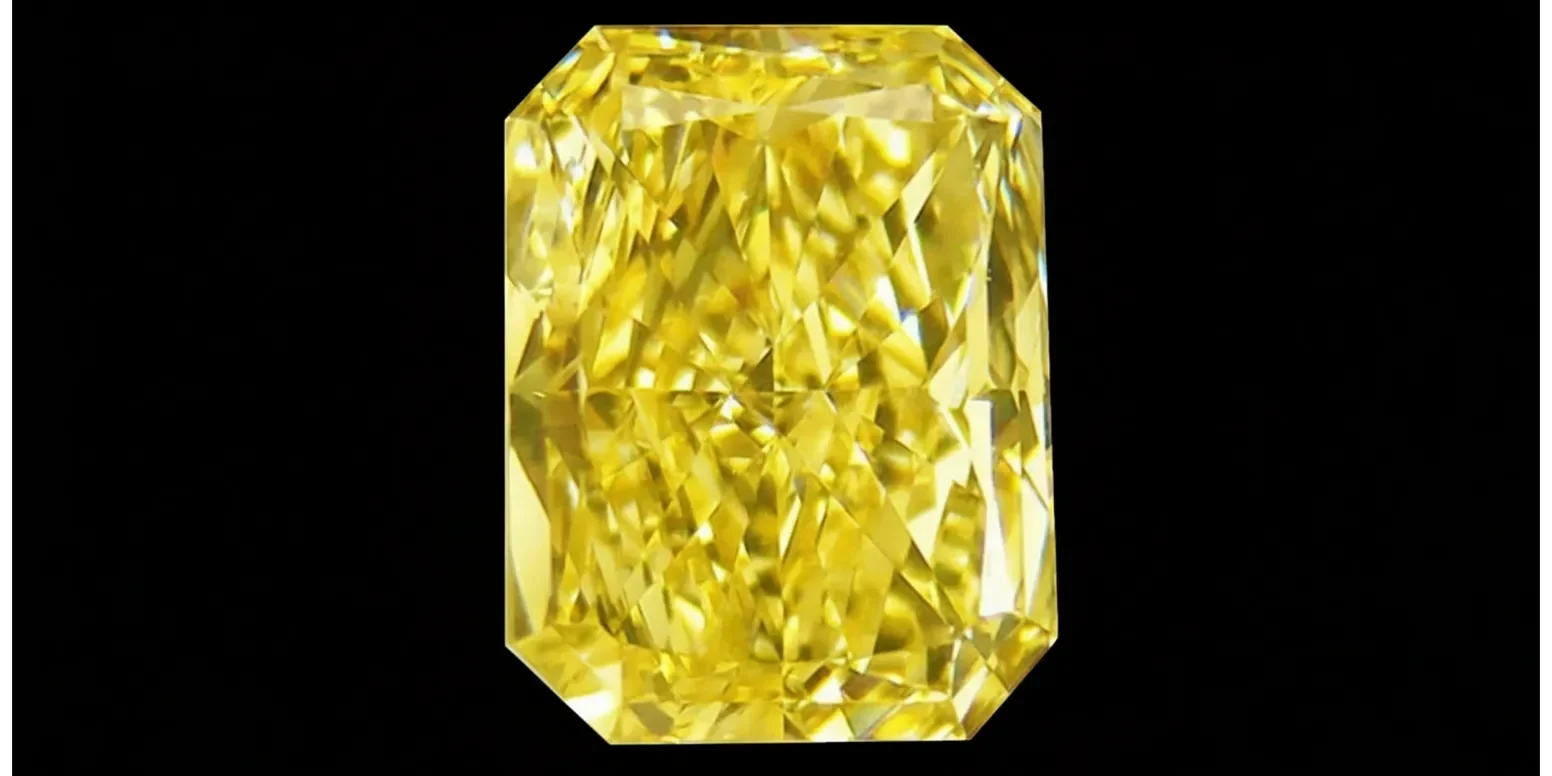
Close-up of a radiant yellow diamond against a black background.

RARITY

8/10

Vivid, fancy-intense yellows. Yellow diamonds are the most recognisable, and most common fancy colour of diamonds. Deeply saturated, evenly-coloured stones also with good clarity are genuinely rare. Approximately 0.01% (or 1 in 10,000) of all natural diamonds are classified as ‘fancy-coloured’, a testament to their rarity.

VALUE

9/10

Exceptional stones still sell for six to seven figures. Value rises sharply with saturation, size, and even colour distribution.

Close-up of a radiant yellow diamond against a black background.

YELLOW DIAMOND

INTENSITY IS EVERYTHING.

GEMSTONE FAMILY

White diamonds are made of pure super-compressed, crystalline carbon. To make them yellow, the additional presence of nitrogen is needed. They have the same immense hardness as white diamonds (10 on the Mohs scale).

Just like white diamonds, they require extreme conditions to form. Yellow diamonds crystallise approximately 100 miles (160 km) beneath the Earth’s surface, in the mantle. They require temperatures exceeding 1,000°C and intense pressure to form. During crystallisation, nitrogen atoms substitute for some of the carbon atoms in the diamond’s crystal lattice.

They also remain trapped at these immense depths until rare, volcanic eruptions blast them closer to the surface, where they can be mined, or even found.

EARLIEST USAGE

The earliest recorded use of yellow diamonds was in India, 4th–3rd century BC. Yellow diamonds were documented alongside colourless stones in early Sanskrit texts.

They were historically worn as symbols of divine favour, representing wealth and authority. In Europe, yellow diamonds were once considered less desirable, until modern fancy-colour grading reframed them as luxury objects. Yellow diamonds are a modern re-interpretation of ancient material.


SIGNIFICANT DEPOSITS

WHERE THEY COME FROM

Many traditional diamond mines also produce yellow, or other fancy colour diamonds, almost like a best-case scenario byproduct. Hence a lot of these mines are similar to those listed in the diamond section:

South Africa

Kimberley Mine is a historic source of early yellow diamonds. Also the massive Venetia Mine has become a major modern producer.

Botswana

Jwaneng Mine — the ‘world’s most valuable’ diamond mine, continually produces high-quality yellow stones.

Australia

Argyle Mine (now closed), was better known for exceptional fancy pinks, but also produced warm, deep yellow diamonds.

Russia (Yakutia)

The Mirny Mine, or ‘The Portal to the Underworld’ was for decades a source of both intense and light yellow diamonds, yet resources are now considered largely depleted.

Canada

Ekati & Diavik mines — notorious for lighter yellow diamonds with high clarity, but ultimately less value due to the lower saturation/nitrogen content.

FINALISATION

ALL FACES ARE BESPOKE

We’re ready when you are. Get in touch below.

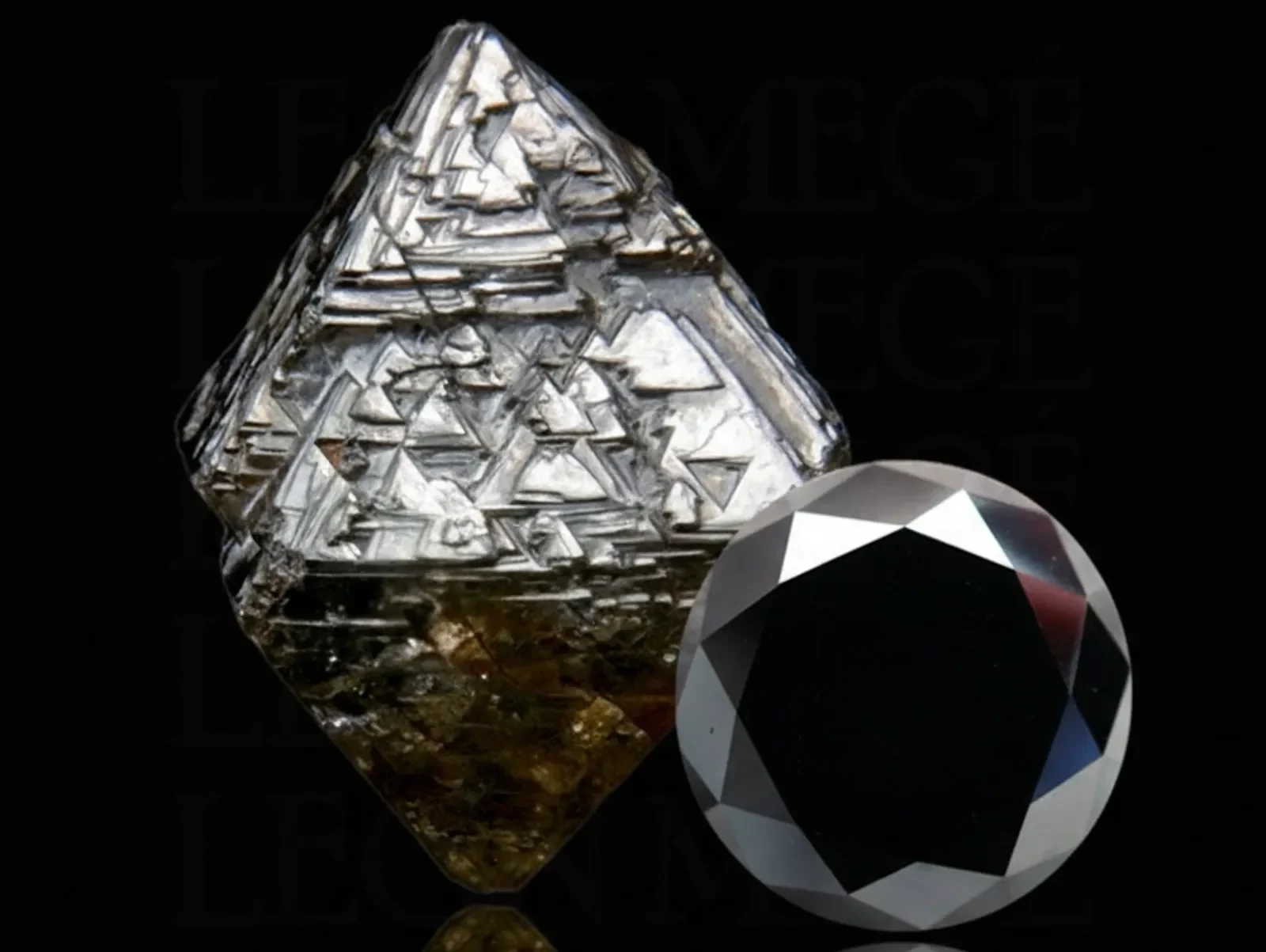
BLACK DIAMOND BACKGROUND

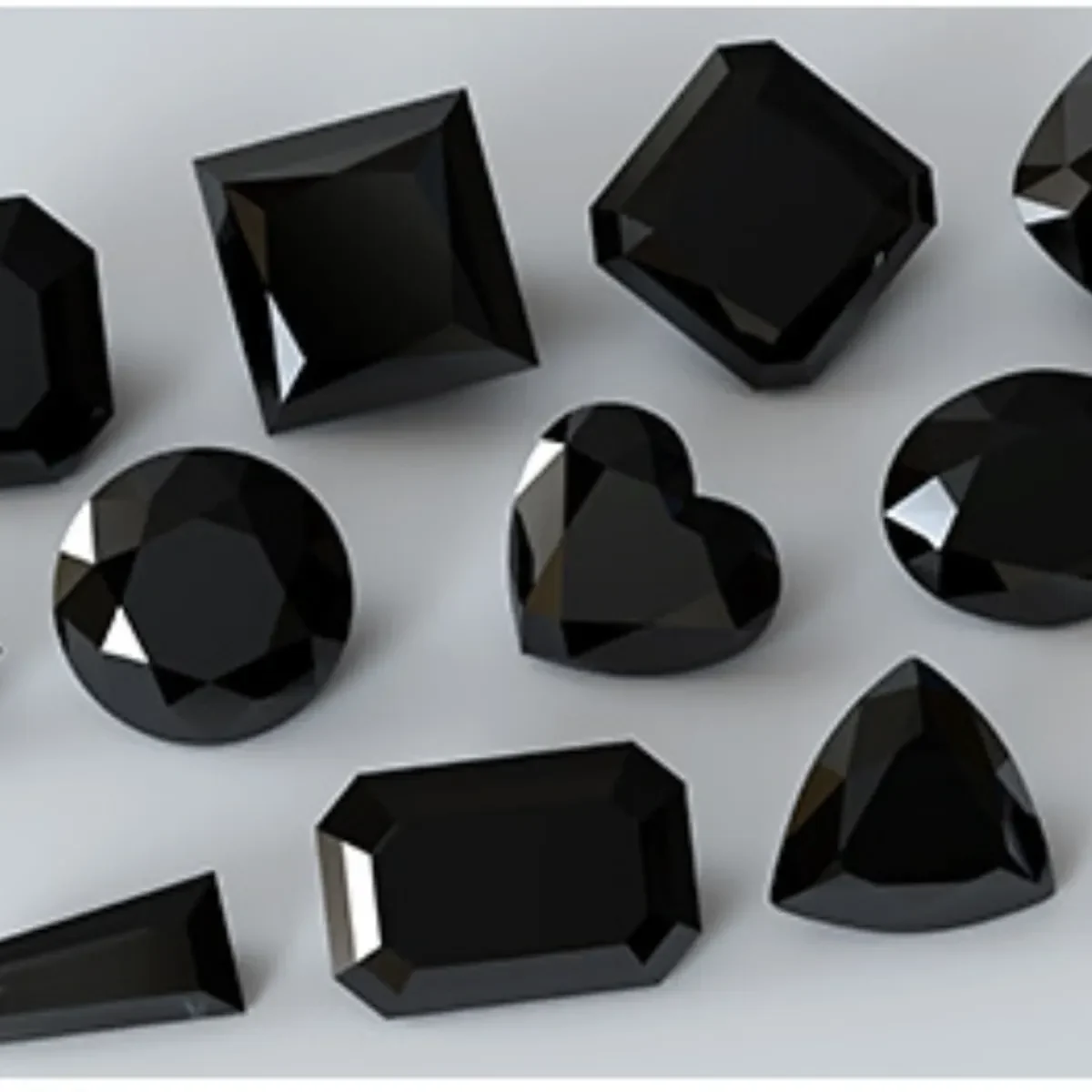
Black diamonds absorb light instead of reflecting it

Traditional diamond value is built on brilliance — their shine, and how they reflect and refract light. Black diamonds invert that traditional logic — they are valued for absence, and absorbtion of light.

Some black diamonds may be extraterrestrial

Carbonado structure, and lack of traditional diamond inclusions, suggest many of them may have formed in space and later arrived via meteorite impact. This theory is still debated, but regardless they’re rare in gemmology.

They are tougher than regular diamonds

Not to be confused with hardness, black diamonds are tougher than regular diamonds — meaning they have a stronger ability to resist fracture, making them historically useful for industrial drilling before synthetic (lab) diamonds existed.

A group of polished black diamonds arranged on a pale surface.

RARITY

8/10

Carbonado (natural). Natural, untreated black diamonds are among the rarest diamond types on Earth. They account for only about 0.1% to 1% of all diamonds found worldwide. Treated black diamonds are far more common, we don’t use those.

VALUE

7–8/10

Value is driven more by origin, narrative and design context (their opacity/blackness) than traditional diamond metrics (ie cut, clarity, brilliance).

GEMSTONE FAMILY

Natural carbonado (the ‘space’ diamonds) are one of the rarest and certainly the most mysterious members of the family. Unlike other diamonds, they are polycrystalline, meaning they are made of millions of tiny carbon diamond crystals fused together.

Many scientists believe carbonados formed in supernova explosions billions of years ago, likely arriving on Earth inside a massive meteorite that crashed into the supercontinent Pangea before Africa and South America split apart.

Unlike traditional diamonds, they are highly porous, containing traces of nitrogen and hydrogen (common in space). They have also never been found in traditional diamond-bearing volcanic pipes (which is how diamonds usually come to the surface).

Carbonados are truly a unique, and fascinating stone — but beware of treated, or synthetics. These are increasingly prevalent.

EARLIEST USAGE

Brazilians in the early 1700s were the first to find carbonado diamonds, discovered during gold-mining expeditions. Interestingly they were initially dismissed as low-value because they could not be faceted traditionally.

For years the were adopted for industrial use. It was only much later, in the late 20th century, when testing methods became more advanced, that we realised the true unique formation and structure of these stones, sky-rocketing their value.


SIGNIFICANT DEPOSITS

WHERE THEY COME FROM

Unlike fancy colour diamonds, carbonados aren’t found in any of the traditional mines, or even the same countries as colourless diamonds. The main localities are few and far between:

Brazil

The Bahia region was the first, and has continued to be the primary source of carbonado diamonds.

Central African Republic

Found in alluvial deposits (sediments deposited by rivers, streams, and floods).

Venezuela

Rare, and small natural occurrences.

FINALISATION

ALL FACES ARE BESPOKE

We’re ready when you are. Get in touch below.

FIND AND FORM YOUR FACE

We’ll only use these details to reply to your enquiry. We don’t share them, and we don’t send marketing.

Thank you — your Face is on its way to us. We’ll be in touch shortly.

That didn’t send. Please check your connection and try again.

Elegant silver ring with a blue emerald-cut gemstone and diamond accents.

INFORMATION COLLECTED

We collect only basic information necessary to operate our business effectively. This may include:

  • Personal identification information (such as name and email address)
  • Contact details provided via forms, subscriptions, or enquiries
  • Order-related information (where applicable)
  • Technical data such as IP address, browser type, device information
  • Cookies and basic analytics data

We do not collect sensitive personal data unless required by law or explicitly provided by you.

HOW WE USE INFORMATION

We use the information we collect to:

  • Respond to enquiries and customer requests
  • Process enquiries
  • Communicate updates, confirmations, or service-related messages
  • Improve our Website, products, and user experience
  • Comply with legal and regulatory obligations

Your information is used strictly for legitimate business purposes.

COOKIES AND ANALYTICS

Our Website may use cookies and similar technologies to:

  • Ensure the Website functions properly
  • Analyse traffic and user behaviour
  • Improve performance and content

You may disable cookies through your browser settings; however, some parts of the Website may not function correctly as a result.

SHARING OF INFORMATION

We do not sell, trade, or rent your personal data. Your information may only be shared with trusted third parties where necessary to:

  • Operate the Website
  • Process payments or services
  • Comply with legal obligations

All third parties are required to protect your data in accordance with applicable laws.

INTERNATIONAL USERS

We operate worldwide. By using our Website, you acknowledge that your information may be transferred to and processed in countries outside your own, including jurisdictions with different data protection laws. We take reasonable steps to ensure your data remains protected.

DATA SECURITY

We implement appropriate technical and organisational measures to safeguard your personal data against unauthorised access, loss, misuse, or disclosure. However, no method of transmission over the internet is completely secure.

INTELLECTUAL PROPERTY & TRADEMARK OWNERSHIP

All jewellery designs, visual concepts, product designs, trademarks, logos, branding elements, and original creative works displayed on this Website are the exclusive intellectual property of Louis Hira.

Louis Hira is the sole owner of the trademark rights associated with these designs. Any unauthorised reproduction, imitation, distribution, or commercial use of designs — in whole or in part — is strictly prohibited and may result in legal action.

Nothing in this Privacy Policy or on this Website grants any licence or right to use intellectual property without prior written consent from Louis Hira.

YOUR RIGHTS

Depending on your location, you may have rights under applicable data protection laws, including the right to:

  • Access your personal data
  • Request correction or deletion
  • Withdraw consent where applicable

To exercise these rights, please contact us.

CHANGES TO POLICY

We reserve the right to update or modify this Privacy Policy at any time. Any changes will be effective immediately upon posting on this page.

CONTACT INFORMATION

If you have any questions about this Privacy Policy, data protection practices, or intellectual property matters, please contact below.